Memory Rally Stalls and Metals Sell Off Post-Holiday: Hormuz Talks Open a Window While MLCC Lead Times Worsen Again
1Week-over-Week Comparison — Segment Changes & Drivers
Comparison window: W40 (2026.09.25–10.02) vs W41 (2026.10.02–10.09). Sixteen categories / metrics moved materially; risk rating holds at 7 red but yellows rise from 2 to 3 as inertial measurement units (IMU) enter tracked coverage for the first time. The week's defining feature is divergence — memory momentum fading while post-holiday base metals ease broadly, against an MLCC repricing wave that just turned industry-wide.
| Category / Metric | Last week (W40) | This week (W41) | Direction | What changed |
|---|---|---|---|---|
| Memory DDR5 16Gb (2Gx8) Spot session |
USD 58.00 | USD 58.900 (+1.55%) | ↘ Gaining slower | Oct 9 morning session at USD 58.900 (+1.55%, single session +0.40%) — the gain converged sharply from last week's +5.02%, the single most important change in memory; DDR5 16Gb eTT 26.800 (+2.68%). The trend is intact but the slope has flattened: capacity is still concentrating into server / DDR5, yet spot no longer pays a scarcity premium at the same rate |
| Memory DDR4 16Gb (2Gx8) Spot session |
USD 83.588 | USD 83.640 (+0.06%) | → Flat | Oct 9 session USD 83.640 (+0.06%) — last week's -1.87% profit-taking is over. DDR4 16Gb eTT 14.125 (+0.89%). This tier has now been marginally flat for two consecutive weeks, so the substitution-driven pullback has largely released its momentum; on a 30-day basis it is still +6.03% |
| Memory DDR4 8Gb (1Gx8 3200) Spot session |
USD 46.321 | USD 46.186 (-0.29%) | ↓ Sole decliner | Oct 9 session USD 46.186 (-0.29%, single session -0.46%) — the only declining memory tier this week; DDR4 8Gb eTT 5.950 (+0.17%), DDR3 4Gb 13.720 (flat). Classified as post-holiday liquidity normalization (profit-taking), not demand weakness — the 30-day dimension is still rising at +5.2%, so this is not a buying signal either |
| Memory module DDR5 RDIMM 32GB Module quote |
USD 2,163.50 (9/28 quote) | USD 2,163.50 (carried) | → No new session | No new module session this week; the Sep 28 quote of USD 2,163.50 is carried forward. Per the pricing-caliber rule, module and die quotes carry separate session dates and must never be cross-derived — no module-side weekly change is stated this week even though the die side moved |
| 🆕 MLCC (AI servers) Price |
Samsung E-M 10/6 LTA | Murata + Taiyo Yuden hike | 🆕 Collective | Murata and Taiyo Yuden issued notices on the same day — AI-server high-cap MLCC +15-35% — putting the three Japan/Korea majors in step with Samsung E-M. Yageo lead times stretch to 12-16 months with customers bidding 2-3× for allocation; demand above 47μF has grown nearly 10× in two years and lead times moved from 6-8 to ~16 weeks; high-end shortfall 15-20% in 2H26 widening to 30% in 2027. Japan+Korea CR5 ~77.3% (Murata 31.8% / Samsung E-M 22.9% / Taiyo Yuden 11.2%) vs mainland ~10%, whose AI-grade orders are already booked into 2027 Q2 |
| Power devices (onsemi) Price |
Last window before effective | Effective from Oct 10 | 🆕 Now effective | onsemi's +5-15% across MOSFET / IGBT / SiC became effective Oct 10 — Oct 9 was the last executable working day in the collection window, so the pricing window has closed and the task shifts to execution verification (does the invoice actually carry the new price?). Taiwan makers (Panjit / TSC /Epis) may follow +10-15% as early as Q4; Renesas reprices from Jan 1, 2027 (announced, not yet effective) |
| Foundry (utilization / 2027 pricing) Capacity |
8-inch ~88% expected | 8-inch back to ~90% | ↑ Continuing | 8-inch wafer foundry utilization recovered to nearly 90%, narrowing supply elasticity further. 2027 pricing framework unchanged: TSMC mature-node +3-10%, 2nm +6-8%, sub-7nm +5-10%, HPC surcharge +10-15%; Samsung +10-15% on some 4/5nm new orders; SMIC / Hua Hong +10-15% cumulative; PSMC +45% on memory foundry — which gives capacity cover for the coming MCU / PMIC second wave |
| Shanghai Tin Futures |
RMB 409,600/t (9/30) | RMB 392,110/t | ↓ Sharp drop | The week's largest decline: SHFE tin RMB 392,110/t (-4.27%); LME tin 51,495 USD/t (-5.13%). Myanmar Wa State restart and Indonesian export policy remain the swing variables, and post-holiday downstream restocking appetite is weak. Procurement implication: solder and tin-plating cost pressure eases at the margin — use this dip to negotiate Q4 rebate / adjustment clauses. Futures price — not cross-comparable with spot |
| Shanghai Copper Futures |
RMB 109,680/t (9/30) | RMB 110,030/t (+0.32%) | ↗ Only gainer | Oct 9 close RMB 110,030/t (+0.32%) — the only base metal to rise; Oct 8 reopening day closed 110,260 (+0.63%), Oct 9 night session pulled back to 108,910 (-1.65%). LME copper 14,294.5 USD/t (-1.09%), LME copper inventory 235,225t (-4,650 WoW). Copper concentrate TC at USD -224.47/dmt is a historic low; Escondida has opened labor mediation with strike risk at Centinela. The move is AI-datacenter copper demand, not tariff speculation |
| Other base metals Futures |
Al 23,830 | Al 23,510 / Zn 25,945 / Ni 119,460 / Pb 16,010 | ↓ Broad decline | Oct 9 closes: aluminum -1.34%, zinc -1.07%, lead -1.26%, nickel -0.08%; LME aluminum 3,042 USD/t (-2.66%). Drivers: post-holiday catch-up selling, a temporarily stronger USD and seasonally softer demand. Procurement implication: connector plating, aluminum-electrolytic and die-cast component costs ease at the margin — but the relief has not yet reached component quotes, so argue from "expected pass-through," not "already passed through" |
| Lithium carbonate / polysilicon Spot |
RMB 145,800/t | RMB 120,800/t · Si 36,380 | ↓ Still falling | Lithium carbonate -0.61%, polysilicon -0.36%; industrial silicon RMB 8,655/t bucked the trend at +1.47%. The green-alert whitelist is unchanged (ordinary connectors / lithium carbonate / polysilicon) — no green rating is granted anywhere in the PCB chain, where fabric and copper foil remain structurally short |
| Freight (container / dry bulk / tanker) Spot |
SCFI 3,662.30 · BDI 3,510 | SCFI frozen · BDI 2,994 · VLCC TCE +77% | ↘ Dry bulk / ↑ Tanker | SCFI and CCFI did not publish during the National Day holiday and are marked "frozen" at 3,662.30 / 1,905.40 — no weekly change may be read from them; the 10/10 print rolls into W42. BDI printed Oct 8 at 2,994 (-14.70%) on same-caliber endpoints (10/02 → 10/08), daily moves -0.27% to -0.70%. VLCC TD3C Middle East–China TCE ~USD 113,047/day (+77%) — tanker rates remain extremely elevated. BDTI is not adopted this week due to conflicting multi-source readings |
| 🆕 Geopolitics — Hormuz Energy |
Bab al-Mandeb 6 ships/day | Talks + sanctions in parallel | 🆕 Two-way scenario | The week's focus shifted from the Red Sea to the Strait of Hormuz. Iran's foreign minister said on Oct 8 he is evaluating a US proposal to reopen the Strait within seven days, and President Trump said no military action against Iran before the Nov 3 midterms; yet the US sanctioned Iranian crude carriers on Oct 9, pushing Brent to USD 104.30/bbl (+4.07%). Saudi Arabia is negotiating alternative loading routes outside Hormuz. Assessment: risk eased at the margin but is not resolved — the chokepoint carrying roughly a fifth of seaborne crude now has a negotiation exit and a sanctions escalation running at the same time |
| 🆕 Connectors (224G localization) Qualification |
Shenglan wins Molex license | AVIC Jonhon in volume | 🆕 Volume supply | AVIC Jonjon's 224G high-speed connectors passed validation at a leading server maker and are now in volume supply (qualified for GB200 / B300); Huafeng Technology has 224G in volume delivery and 112G in large-volume delivery; Shenglan won Molex Inception authorization. Domestic substitution has moved from sample validation and licensing into volume supply — though full certification cycles still take 12-18 months |
| 🆕 IMU (inertial measurement) New tracking |
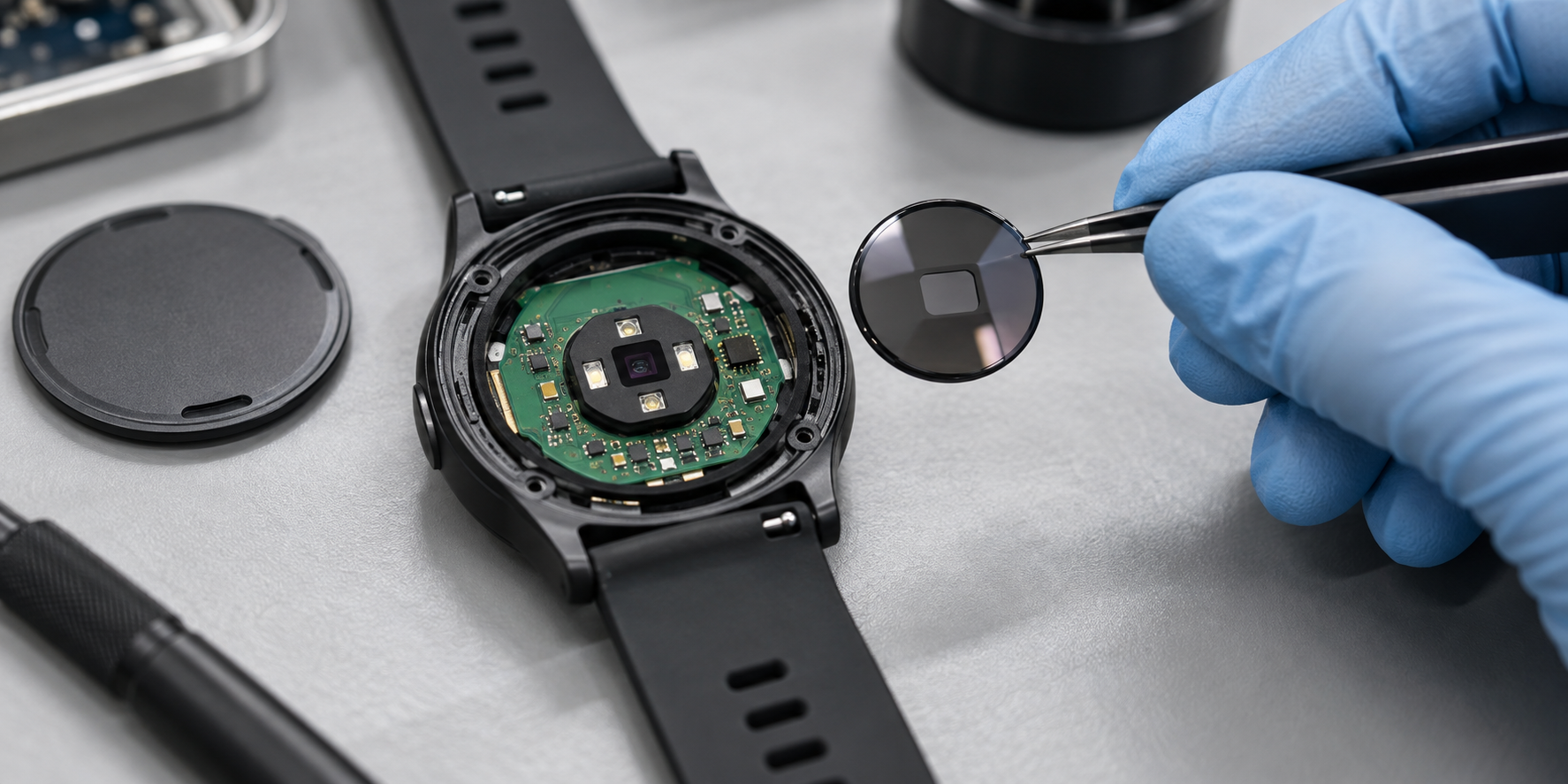
Not tracked | 14th category added | 🆕 New — Yellow | IMU enters tracked coverage as the 14th standard category, rated yellow: consumer six-axis MEMS RMB 50-300, industrial RMB 1,000-3,000, tactical RMB 5,000-20,000, strategic >RMB 100,000. Domestic alternatives run at roughly 50-70% of imported pricing with lead times cut from months to days; market reference: Murata SCC2130-D08 ~RMB 680 at channel. Industrial tier is where substitution elasticity is greatest |
| USD / RMB FX |
6.7351 (9/30 parity) | 6.7330 (10/9 parity) | ↗ RMB firmer | Oct 9 central parity 6.7330, +21bp vs the Sep 30 endpoint of 6.7351 (Oct 8 was 6.7367, a 37bp daily step) — the strongest range since February 2023; the RMB has gained 4.18% on parity over the first three quarters; CICC sees October oscillating around 6.70 (range 6.64-6.78). Local-currency cost of USD-priced memory / MLCC / analog keeps improving, partially offsetting OEM price hikes — keep FX-linkage clauses on import quotes to capture the window |
2Five Forces Driving the Market This Week
3Risk Heat Map — 14 Segments × Three Time Windows
Color block = supply / price tightness. Bold outline = moved this week. Red = rising / high risk, green = falling / loose supply-demand (China market convention). IMU is new this week, entering at yellow alert.
| Segment | 1H 2026 | Current (Oct 9) | 2027 Outlook | |
|---|---|---|---|---|
| Memory DRAM / DDR5 | High | Red alert | Red alert | +1.55% — gain converging; 4Q26 +12-18% pending |
| NAND / eMMC | High | High | High | 4Q26 NAND +10-15%; no fresh session this week |
| MLCC Ceramic Capacitors | Red alert | Red alert | Red alert | Three majors repricing in step; Yageo 12-16 months |
| Tantalum Capacitors | High | Red alert | Red alert | Concentrate >$250/lb; Cape reroute + war-risk still additive |
| Aluminum-Electrolytic / Film | Yellow alert | Red alert | High | Aluminum -1.34% brief window; prebaked anode +RMB 495/t |
| MCU Microcontrollers | High | Red alert | Red alert | 8" utilization ~90%; 2nd wave has capacity cover |
| Analog / Power Management | High | Red alert | Red alert | Renesas reprices Jan 1, 2027; TLVR inductors +45-70% |
| Power Devices | High | Red alert | Red alert | onsemi +5-15% effective 10/10; Taiwan +10-15% Q4 |
| PCB / CCL | Yellow alert | Red alert | Red alert | No new fabric hike; G75 / 7628 in execution check |
| Copper / Base Metals | High | High | High | Tin -4.27% but copper +0.32%; TC -USD 224.47/dmt |
| Freight / War-risk | Yellow alert | High | Elevated | SCFI frozen; BDI -14.70%; VLCC TCE +77%; BDTI not adopted |
| Connectors / RF | Yellow alert | Elevated | Elevated | 224G in volume supply for GB200 / B300 |
| 🆕 IMU / Sensors | Watch | Yellow alert | Elevated | New tracking; tactical / strategic tiers still import-led |
| FX / Policy | Watch | Watch | Watch | RMB 6.7330 — strongest since Feb 2023; 232 still pending |
4Memory — The Rally Keeps Its Level but Loses Its Slope
The week's message is about rate of change, not direction: DDR5 16Gb spot added only +1.55% to USD 58.900 versus +5.02% last week, DDR4 16Gb was flat at USD 83.640, and DDR4 8Gb slipped -0.29% to USD 46.186 as post-holiday liquidity normalized. Meanwhile the RDIMM 32GB module quote had no new session and carries forward at USD 2,163.50 — module and die quotes remain separate series and must not be cross-derived.
Baseline index
YTD +185%
YTD +203%
YTD +412%
YTD +778%
5PCB & CCL — No New Fabric Hike, but Copper and Tin Split, and the Chain Is Not Loose
Directionally this is an easing week for the glass chain — no new e-yarn or e-fabric price letter after last week's +30% jump, which moves from "hike channel" into execution verification. But copper rose while tin fell 4.27%, so the metals chain is diverging rather than loosening, and high-speed laminate still carries a resin-side geopolitical exposure.
| Node | This week / recent action |
|---|---|
| E-yarn G75 / e-fabric 7628 | No new hike letter this week — G75 sits at RMB 25,800-26,000/t and 7628 at RMB 13-13.3/m (+203% vs the Sep-2025 low), now in execution verification. Action: request written new-price order confirmations from suppliers and check for phased execution and back-out credit. Domestic e-yarn nameplate capacity is 1.368Mt/yr of which only ~20kt is low-Dk furnace process; 2026 is a concentrated cold-repair year on 2013-2015 ignitions |
| Copper & copper foil | SHFE copper RMB 110,030/t (+0.32%) — the only base metal up, on AI-datacenter demand rather than tariff speculation. Copper concentrate TC at USD -224.47/dmt is a historic low; Escondida in labor mediation with strike risk at Centinela; LME copper inventory 235,225t (-4,650 WoW). AI-server HVLP foil demand remains the structural pull |
| Tin / solder & plating | SHFE tin RMB 392,110/t (-4.27%), LME tin 51,495 USD/t (-5.13%) — the week's biggest decliner; Myanmar Wa State restart and Indonesian export policy remain swing variables. Use the dip to negotiate Q4 rebate and adjustment clauses on solder and tin-plating lines |
| FR-4 CCL | Order books remain full with lead times of 2-3 months and some firms rationing; if new-price verification confirms full execution on fabric, a second CCL price round in Q4 is likely. Downstream demand is structurally bifurcated — see the PCB capacity evidence below |
| AI high-speed CCL (M8/M9) | PPE resin — ~70% of global supply is Saudi-produced and only ~65% of capacity is restored, with a November maintenance outage scheduled; e-grade PPE up +261% YTD. Saudi Arabia is now negotiating crude loading routes outside Hormuz, so resin arrival timing and cost carry a live geopolitical variable |
| Semiconductor materials | Japan photoresist +15% is effective (Oct 1): high-end ArF +16-22%, HBM immersion ArF up to +24%; wafers rising across all sizes — a second pass-through into foundry cost |
The easing is real but narrow. Glass fabric and solder inputs are softer; copper is not — concentrate TC at USD -224.47/dmt with Escondida in mediation means the smelter side, not the refined side, is where the constraint lives. High-speed laminate still depends on Saudi PPE resin at ~65% restored capacity with a November outage ahead, and Saudi Arabia is actively re-routing its own crude loading, so resin logistics are now a two-variable problem.
On the demand side the bifurcation is stark and it is the reason no green rating is granted anywhere in the PCB chain: Chinese PCB makers disclosed more than RMB 70bn of expansion investment in 1H 2026, essentially all of it aimed at AI servers and high-speed optical modules, with traditional consumer-electronics expansion at zero. Shennan Circuits' H1 PCB revenue rose +36.3% at a 36.85% gross margin with data-center orders above RMB 2bn and a RMB 11bn backlog running to 2028; Shenghong's AI-related backlog is up +85% YoY and locked to 2027-2028; Guanghe's H1 net profit rose +94.4% with servers near 90% of revenue. Taiwan's Q1 2026 PCB output hit TWD 245.6bn (+19.6% YoY, a record for a first quarter), with Q2 estimated at TWD 256.1bn (+17.4%). High-end capacity takes 12-18 months to build, so the 2027 gap does not close on this capital cycle.
6Segment Snapshot
Memory DRAM/NAND RED
MLCC Ceramic Capacitors RED
Tantalum Capacitors RED
MCU / Analog / Power RED
PCB / CCL RED
Semiconductor Materials RED
Connectors / RF ELEVATED
🆕 IMU / Sensors NEW
Metals / Freight / FX
7This Week's Procurement Playbook — What to Do Now
Standing section, rewritten each week for the changes. Pull-in strategy runs parallel to cost-down / substitution paths.
| Segment — this week's move | Procurement / pull-in strategy (this month) | Cost-down & alternatives |
|---|---|---|
| MLCC (AI servers)Murata + Taiyo Yuden both +15-35%; Yageo 12-16 months | Switch the objective from price negotiation to allocation capture — with three majors repricing in step and customers bidding 2-3× for material, the binding constraint is quota, not price. Submit allocation requests early and in writing; ask suppliers to confirm 2027 framework volumes now, because the benchmark is being reset 15-35% higher across the board. Treat quote validity as hours, not days. | Generic 0402/0603 and consumer X5R have decoupled from AI high-cap — never infer AI high-cap pricing from generic parts; rationalize part numbers to gain allocation leverage; qualify a mainland alternative in the industrial tier where CR5 concentration hurts most. |
| Power devicesonsemi +5-15% effective Oct 10; pricing window closed Oct 9 | The window is closed — move from locking price to verifying execution: check whether October invoices already carry the new price, and press for old-price treatment on anything not yet shipped. Pull in 6+ months on MOSFET / IGBT / SiC given 30-50+ week lead times. Obtain written magnitude and effective dates from the Taiwan makers so their Q4 +10-15% does not stack on top of onsemi passively. | Cross-brand pin-to-pin; package arbitrage; domestic power substitution; qualify second sources on long-lead SiC now. Renesas's Jan 1, 2027 repricing should be folded into 2027 budgeting. |
| Memory DRAM/DDR5DDR5 +1.55% (converging); DDR4 8Gb -0.29%; RDIMM no new session | A softer spot tape is not a cheaper contract — 4Q26 still guides DRAM +12-18% and NAND +10-15%. Convert reservations to confirmed POs before mid-October contract settlements close. Do not read the DDR4 8Gb -0.29% as a buying signal; it is post-holiday liquidity normalization with the 30-day view still rising. | Accelerate DDR4→DDR5 migration where design allows (DDR5 16Gb is ~29.6% cheaper than DDR4 16Gb); density / generation swap; freeze the memory sub-BOM early; qualify the pin-compatible successor for industrial parts now. |
| PCB / CCL & metalsNo new fabric hike; tin -4.27%; copper +0.32%; TC -$224.47/dmt | Two opposite negotiations are open at once. Upstream: request written new-price confirmations on G75 / 7628 and test whether execution is phased — if fully executed, a Q4 CCL round is likely. Downstream: use the tin decline to negotiate Q4 rebate and adjustment clauses on solder and plating, while holding the line on copper-linked terms given concentrate TC at a historic low. | Rational material downgrade; layer reduction; panel optimization; qualify a 2nd CCL supplier; for non-AI products test whether M6 can substitute M8. Keep glass-fabric and resin cost as separate line items in negotiation. |
| Geopolitics — HormuzIran evaluating 7-day reopening (10/8); US sanctions (10/9); Brent $104.30 | Two-way scenario, so hedge rather than bet: Nov 3 is the decision window and it directly sets war-risk rates and reroute share. List war-risk and reroute fuel as separate BOM line items with the full three-part cost (rate + surcharge + reroute fuel); confirm per-shipment insurability on Europe / Middle East lanes. Watch Saudi's non-Hormuz loading plan — it is a live variable for electronic-grade PPE resin arrival and cost. | Hold air-freight contingency; pre-book alternative routings; for Europe lanes keep a Suez-return option (saves 10-14 days and ~30% fuel) where the carrier still offers it; negotiate a war-risk rate cap with overrun sharing. |
| Connectors 224GAVIC Jonhon in volume supply for GB200 / B300 | Domestic 224G has crossed from sample validation into volume supply on qualified server platforms — this is the moment to start qualification paperwork rather than feasibility talks. Budget a 12-18 month certification clock and sequence second sources against it. First-mover orders placed now capture allocation before the qualification wave lands. | Domestic 224G / 112G substitution; cross-brand pin-compatible alternates; consolidate high-speed connector part numbers to improve leverage; keep one incumbent-qualified line as a fallback for safety-critical platforms. |
| 🆕 IMU / sensorsNew tracked category; industrial tier RMB 1,000-3,000 | New this week: the industrial tier is where domestic substitution elasticity is largest — domestic pricing runs 50-70% of imports and lead times fall from months to days. Start a dual-source comparison for industrial-grade parts now. For tactical and strategic tiers, plan selection six months ahead and assume import dependence persists. | Domestic six-axis MEMS at the industrial tier; module-level products with temperature compensation and factory calibration; consolidate consumer-grade parts to channel pricing where supply is already ample. |
8Risk Matrix — Likelihood × Impact
Attention allocation: act immediately in the top-right, monitor continuously in the bottom-left.