The Constraint Moves from What Things Cost to Whether You Can Get Them: Foundry Prices Up 10-20% for 1Q27, Lead Times Past 26 Weeks, and Copper, Gold and Silver All Breaking Down
1Week-over-Week Comparison — Segment Changes & Drivers
Comparison window: W46 (2026.11.06–11.13) vs W47 (2026.11.13–11.20). Risk levels are unchanged at 7 red / 4 yellow / 2 green, but the risk form shifted decisively: supply constraints moved from price to availability, while metals and precious metals broke down against a hawkish Fed. Nineteen categories moved materially.
| Category / Metric | Last week (W46) | This week (W47) | Direction | What changed |
|---|---|---|---|---|
| 🆕 Foundry pricing New |
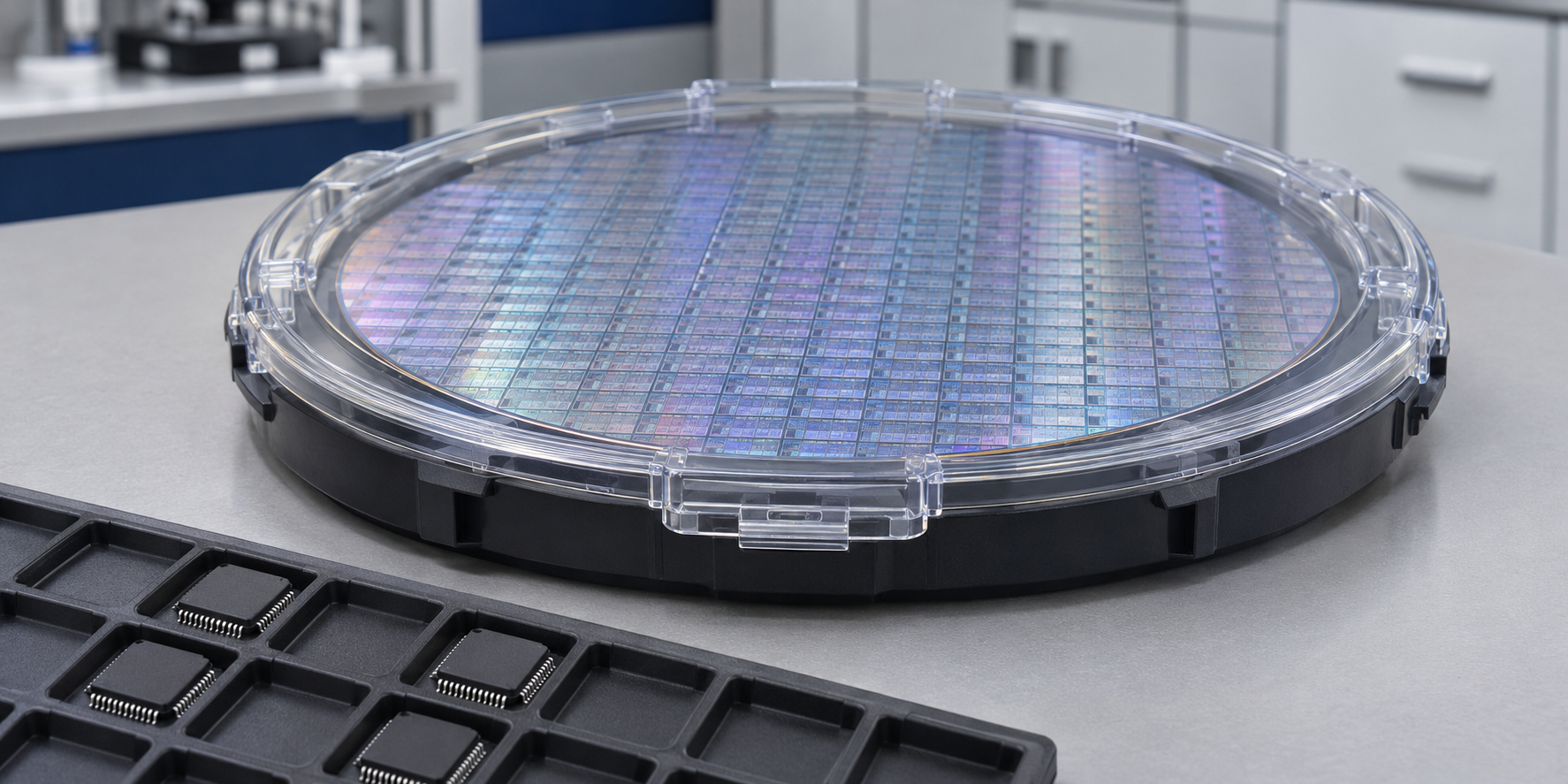
2027 mature-node +3-10% | +10-20% across the board | 🆕 Price set for 1Q27 | The single most consequential change of the week, and it is a pricing decision rather than a market move. Industry reporting on Nov 17-18 has design houses confirming they have received increase notices of 10% to over 20%, effective 2027 Q1, with the leading foundry adding a further 10-15% premium on HPC new orders on top of the base increase. Separately, mature nodes rise 4-8% across both 12-inch and 8-inch in 2027 Q1 — 28nm +6% to USD 2,650, 40nm +5%, 90nm +8% — with Q4 global mature-node utilization at 91% and the two largest foundries reducing 8-inch capacity, taking global 8-inch capacity down 6% and 2% in the next two years. One institution forecasts 2027 global foundry prices up 5-20% with output up about 30%. Implication: design-house gross margins compress 4-5 percentage points and the cost reaches finished products in three to four months — meaning the increase is already in your 2027 bill of materials even though it is not yet in any quote |
| 🆕 Lead times jump Availability, not price |
MCU 72-80 weeks | 26+ weeks, moving out | 🆕 Constraint upgraded | What changed is the clock, not the price. A major distributor's Q4 tracker, published Nov 13, shows power FETs, IGBTs, rectifiers and PMICs moving to 26 weeks or more — the largest single-quarter jump it has recorded — with MCUs and MPUs at 26+ weeks, one MCU vendor above 72 weeks, and programmable logic around 52 weeks. Every memory category is now 26+ weeks: NOR, NAND, eMMC, DRAM and SSD, with DDR4 and LPDDR4 in allocation. Implication: the question for 1H27 is no longer what a part costs but whether it ships, and the answer on several tiers is currently allocation rather than price. Order-book placement now dominates price negotiation. |
| MLCC — from queue to contract Allocation formalised |
61 weeks (named types) | 52 weeks industry; LTA over half | ↑ Supply logic rewritten | Important to read the two numbers together, because they are different calibers and the supply is not easing. On an industry-wide caliber the lead time is 52 weeks; on the caliber of named high-cap types at one maker it is 61 weeks, with a 1005-package 47μF part out of stock for three months. The bigger change is contractual: one maker has signed long-term agreements with 10 companies and is in negotiation with more than 50, with cumulative orders passing KRW 5tn and a standard one-year term carrying volume guarantees and a price-adjustment mechanism against a reference price, and more than half of 2027 MLCC revenue expected to come from these agreements. Second maker: Q3 AI revenue share 19.8% with a 41% gross margin, a 25-quarter high, and MLCC and tantalum capacity planned up 10-15% from 2027 Q2. Third maker: Q3 utilization around 95% with a book-to-bill of 1.83, a record. Implication: capacity is being allocated by contract, which means a buyer without a signed agreement is last in line, whatever the spot quote says |
| 🆕 Macro — Fed turns hawkish Cost of money |
Dec hike odds ~66% | Dec fully priced, 50bp on table | 🆕 Hike repriced | The October minutes released Nov 18 were hawkish beyond market expectation: essentially all participants judged that further tightening is needed, some argued for a hike in October itself, and two said December could consider more than 25bp. A governor reinforced it on Nov 18-19, saying inflation is moving in the wrong direction and a 50bp December hike could be considered; another said multiple hikes may be needed before spring 2027; a third said no need to be aggressive. The market now fully prices a December hike with 73% odds of a further one in January, the dollar index at 103.9, and the 10-year Treasury through 5%. Implication: the financing-cost side of the squeeze is tightening at the same time as the availability side, which is the combination that actually forces allocation decisions |
| 🆕 Precious metals break down Rate-driven |
Gold 842.94 / Silver 12,099 | Gold 802.14 / Silver 10,805 | ↓ Accelerated breakdown | Shanghai gold fell 4.84% to RMB 802.14/g, breaking below RMB 800 and back into the 700s on the night session at 794.34; London spot fell 3.24% to USD 3,625.27/oz, breaking 3,800, 3,700 and 3,600 in sequence. Shanghai silver fell 10.69% to RMB 10,805/kg, with London spot down 4.80% to USD 42.90/oz and COMEX down 4.94% at 42.84 — year to date, silver is now down 40.1% against a base of 18,037 and gold down 18.2% against 981.22. Three drivers, all macro: the hawkish minutes, the 50bp December talk, and a record-size listing by a leading AI lab that siphoned market liquidity — the same primary-market absorption that coincided with a secondary-market selloff in risk assets. Implication: the silver-bearing negotiation window reopened for the first time this quarter, and it will not stay open while the dollar index is at 103.9 and real yields are rising |
| 🆕 Copper breaks RMB 100,000 Price down, physical tight |
RMB 105,380 (+0.65%) | RMB 94,720 (-10.11%) | ↓ Breakout down | The week's most instructive divergence. Shanghai copper fell 10.11% to RMB 94,720, including a single-day 5.07% drop on Nov 18, a five-month low, with a further 3.14% slide to 92,600 in the morning of Nov 20. And yet the physical premium over futures hit a record RMB 7,250/t, the refined-scrap spread narrowed to RMB 1,770, exchange warrants fell to 6,500 tonnes, and concentrate TC remains deeply negative with no new official reading this week. What fell was positioning and expectations, not metal. Year to date copper is -4.0% against a base of 98,700. Elsewhere in the complex: aluminum -3.70% to RMB 21,330 with the London cash premium against three-month at its highest since 1988, zinc -5.14% to RMB 23,985, nickel -3.06% to RMB 118,710, lead -1.36% to RMB 15,545, and tin -7.94% to RMB 327,200 with a further 4.81% drop to 315,020 on Nov 20 while warrants are down to 1,470 tonnes. Implication: this is the clearest case yet of a falling metal price not being a cost signal — do not negotiate copper-intensive cost down on a -10.11% print |
| 🆕 Geopolitics — the risk is deferred Realized, now deferred |
Premium given back, risk not downgraded | Premium re-injected; action deferred | 🆕 Escalation | On Nov 19 two VLCCs struck mines in the Strait of Hormuz and caught fire carrying over 4 million barrels; Houthi forces fired missiles at Riyadh in the same period and a Saudi sovereign wealth building was damaged. The energy authority puts cumulative supply losses from the Middle East conflict at 2.8 billion barrels of oil and 60 billion cubic metres of gas. And the risk window has changed shape rather than level: the president said he will not rush a decision on Iran before the new year, so a near-term event has become a year-long overhang. Implication for buyers: war-risk and reroute clauses must not be withdrawn, and the premium that left on political grounds in recent weeks has now partly returned |
| Energy — Brent back up Spread repaired |
Brent 91.03 / WTI 90.40 | Brent 92.90 (+2.05%) | ↗ Rebound | EIA official Wednesday fixing for the week of Nov 20: Brent USD 92.90/bbl, +2.05%, touching USD 93 intraday, with WTI -1.28% to USD 89.24 — so the Brent-WTI spread widened from USD 0.63 to USD 3.66 (cross-check: 92.90 − 3.66 = 89.24), back to the bottom of its normal 3-8 band. The reading: this week's rise is the European physical end re-injecting a geopolitical premium, not global demand strengthening. Crude remains the common upstream for plastics, synthetic rubber, organic solvents and housing sheathing, with a two to four week transmission lag. Action: keep Brent-linked clauses, do not raise the benchmark, and recompute Q4 fuel surcharges against USD 92-93 |
| 🆕 Three-head summit New |
No dialogue | Shenzhen summit + declaration | ↗ Marginal positive | On Nov 19 the heads of three states held the first three-way summit in Shenzhen and issued a Peace Declaration stating an intention to increase refined petroleum product production and supply and to open dialogue on reducing nuclear risk and non-proliferation. Implication: a marginal positive for oil product supply at the margin, but nothing on Iran sanctions or the shipping blockade has softened — so it does not change the war-risk or reroute position |
| Memory — DDR5 holds, DDR4 keeps sliding Divergence widens |
DDR5 60.233 / DDR4 8Gb 44.714 | DDR5 60.667 / DDR4 8Gb 43.921 | ↗ DDR5 up, DDR4 down | Nov 19 session: DDR5 16Gb 60.667 (+0.72%, single session +0.28%) — ending two consecutive weekly falls and an eleventh consecutive week above USD 60. DDR4 8Gb 43.921 (-1.77%, single session -0.25%) — a third consecutive weekly decline and now below USD 44, down 6.8% from the Oct 23 high of 47.107. DDR4 16Gb 78.825 (-1.16%), down 8.1% from the Sep 18 high of 85.750. DDR3 4Gb 13.806 (+0.21%, single session flat) — the legacy tier is again the most stable. The generational spread widened further, from about USD 15.52 last week to roughly USD 16.75, as the newest tier held while the old ones fell. Contract side unchanged: 4Q26 general DRAM +10-15% and NAND +15-20%, with original-equipment DRAM and HBM effectively sold out to 2029. Implication: the substitution clock is running faster on the old tiers, and with every memory category at 26+ weeks and DDR4 in allocation, the substitution decision now has to be made against a queue rather than a price |
| Cycle-top signal Two readings |
Cycle ends June 2027 | Both signals stand | → Anchor, with caveat | Both signals must be held at once, and neither should be taken alone. One listed memory maker's chairman continues to say memory price increases have reached their limit and this up-cycle ends in June 2027. Against that, 4Q26 general DRAM contracts are still +10-15% and no new contract prints landed this week. Implication: the inflection has not arrived, but it now has a date, which is enough to size 2027 commitments against a peak rather than a plateau. This remains the anchor for long-horizon planning |
| 🆕 Liquid cooling and 224G move into volume New |
Domestic 224G in supply | Volume + 15+ nominations | 🆕 Demand real | Two disclosures this week show the AI interconnect cycle moving from qualification into volume. One domestic leader disclosed that its 224G DAC and ACC are in mass production, roughly a quarter ahead of peers, with cable backplane shipping in volume to multiple customers in North America and domestically, 448G standard bandwidth above 110GHz, and liquid-cooling parts and quick-disconnect connectors nominated on more than 15 projects at a major customer. A second domestic maker confirmed its first 224G order covering more than 600 racks, to be delivered before March 2027, at roughly USD 100,000 of connector value per rack. Separately, a liquid-cooled supernode platform's first commercial contract landed at RMB 870m, with per-rack communication density 8-10 times a conventional server and per-rack power of 50-120kW — which moves liquid cooling from a bottleneck component to a mandatory one. Implication: the 224G certification cycle remains 12-18 months, so domestic supply does not relieve 2027 H1 even as volume arrives |
| Freight Spot |
SCFI 3,572.33 (11/13) | SCFI carried; BDI 2,901 | → Box flat, bulk down | The Nov 20 container index published at 15:00, after the cutoff, so the Nov 13 reading of 3,572.33 (-1.46%) is carried; a media-cited figure for the Nov 20 issue is not adopted because it is not an official print. CCFI 1,919.27 (-0.28%). The Europe settlement index rose 4.13% to 2,289.56 on Nov 17, revised up mainly on fewer alliance sailings. BDI fell -2.65% to 2,901 on Nov 19, with Capesize 4,514 (-0.77%), Panamax 2,132 (+0.14%) and Supramax 1,814 (-0.17%), and five-year-old tonnage still earning about USD 37,438 a day. December increases are now dense — one carrier targeting USD 4,600 per FEU, another USD 4,200 plus a USD 1,000 peak-season surcharge from Dec 1, two more at USD 4,200-4,600 and USD 4,606-4,706 — against spot Europe of roughly USD 2,800-3,000 per FEU, where one carrier has held USD 3,000 for 48 weeks. That is a wide gap between announced and spot, and the December contract negotiation is the place it resolves |
| Auto demand Third negative |
-21% (Nov 1-8) | -25% (Nov 1-15) | ↓ Third period negative | November 1-15 passenger-vehicle retail was 611,000 units, down 25% year on year and down 6% month on month, with new-energy at 447,000, down 13% and up 7%, and new-energy retail penetration at 73.2%; cumulative retail reached 15.589 million units, down 22%. Automotive electronics demand has now been negative for three consecutive periods and the purchasing basis needs to be marked down again. But the structural driver of the squeeze is unchanged — AI continues to take the allocation from vehicle-grade parts, and automotive memory certification runs 2-3 years, so vehicle-grade parts cannot be re-sourced inside a quarter. Guidance: negotiate on annual framework prices, do not place expediting orders |
| 🆕 Liquidity siphon New |
— | Record IPO proceeds | 🆔 Absorbs liquidity | A leading AI lab's listing on Nov 19 set a record for the largest-ever fundraising, absorbing market liquidity; precious metals sold off alongside it and international gold broke 3,800, 3,700 and 3,600. The important read is that primary-market absorption and secondary-market risk-asset selling share the same root — and with the Fed repricing a December 50bp, the liquidity that normally supports gold and growth equities is being pulled in two directions at once. Watch whether AI infrastructure payment terms deteriorate |
| USD / RMB FX |
6.7152 (11/13 parity) | 6.7131 (11/20 parity) | ↗ Small appreciation | Nov 20 central parity 6.7131, a further 21bp appreciation against 6.7152. Note what is happening: the RMB appreciated even with the dollar index at 103.9, which points to counter-cyclical fixing and dollar-long crowding rather than domestic strength. Implication: a small local-currency buffer on dollar-priced imports, but it is not a reason to relax on a USD-denominated long-term renewal — keep FX-linkage clauses |
2Five Forces Driving the Market This Week
3Risk Map — 14 Segments × Three Time Windows
Color block = supply / price tightness. Bold outline = moved this week. Red = rising / high risk, green = falling / loose supply-demand (China market convention). Overall rating unchanged at 7 red / 4 yellow / 2 green; the dominant shift is from price risk to availability risk.
| Segment | 1H 2026 | Current (Nov 20) | 2027 Outlook | |
|---|---|---|---|---|
| Foundry / Wafer | High | Red alert | Red alert | +10-20% for 1Q27; mature +4-8%; 8" capacity -6%/-2% |
| Memory DRAM / DDR5 | High | Red alert | Red alert | DDR5 +0.72%, 11th week above $60; spread widens to ~$16.75 |
| NAND / eMMC | High | Elevated | High | Lead time now 26+ weeks; sold out to 2029 |
| MLCC Ceramic Capacitors | Red alert | Red alert | Red alert | 52-wk industry lead time; over half of 2027 revenue contracted |
| MCU Microcontrollers | High | Red alert | Red alert | 26+ wks (one vendor 72+); DDR4/LPDDR4 in allocation |
| Power Devices | High | Red alert | Red alert | FET/IGBT/rectifier to 26+ wks; Taiwan +10-15% now actually executed |
| Analog / Power Management | High | Red alert | Red alert | Foundry pass-through + two 2027 cross-year letters still unresolved |
| Tantalum Capacitors | High | Red alert | Red alert | Nov 1 round +20-30% in execution; longest lead time 84 weeks |
| Aluminum-Electrolytic / Film | Yellow alert | Red alert | High | Lead time 18-22 wks; domestic price move closes the substitute path |
| PCB / CCL | Yellow alert | Red alert | Red alert | Nov assessment held; December assessment due early; fabric at RMB 15/m+ |
| Copper / Base Metals | High | High | High | Price -10.11% but physical premium at a record; not a cost signal |
| Freight / War-risk | Yellow alert | High | High | Risk deferred into the new year; 2 VLCCs struck; December increases dense |
| Connectors / RF / Liquid Cooling | Yellow alert | Elevated | Elevated | 224G into volume; 15+ liquid-cooling nominations; cert 12-18 months |
| Precious Metals / Macro | Watch | High | Elevated | Silver -40.1% YTD; hawkish minutes; Dec 50bp on the table; dollar 103.9 |
4Memory — Spot Diverging Harder, and the Contract Side Quietly Sets the Price
DDR5 16Gb rose +0.72% to USD 60.667, an eleventh consecutive week above USD 60, while DDR4 8Gb fell -1.77% to USD 43.921, a third consecutive weekly decline below USD 44, and DDR4 16Gb fell -1.16% to USD 78.825. The generational spread widened to roughly USD 16.75. And on the contract side nothing changed at all — 4Q26 general DRAM +10-15% and NAND +15-20%, with original-equipment DRAM and HBM effectively sold out to 2029.
Baseline index
YTD +185%
YTD +275%
YTD +451.7%
YTD +735.6%
4BAI Capacity Allocation — Why Everything Else Is Getting Squeezed
The week's headline is that pricing power has returned to the foundries and the supply question has become an availability question. Increases of 10-20% across all nodes for 2027 Q1, a further 10-15% premium on HPC new orders, mature nodes up 4-8%, 8-inch capacity being withdrawn, and lead times stepping up to 26 weeks and beyond across power, MCU and every memory category. This matrix tracks where AI orders are being absorbed and what is displaced as a result — a standing weekly tracker, because it is the mechanism behind the whole price complex rather than a one-week event.
HBM and memory majors
Niche memory suppliers
Leading-edge foundry
Analog, embedded and power
MLCC makers
High-speed connectors and liquid cooling
Substrate, high-layer PCB and CCL
Original-equipment buyers
5PCB, CCL & Metals — Copper Broke 100,000 While Its Physical Premium Hit a Record
The week produced the cleanest possible demonstration that a falling metal price and a falling input cost are different things. Shanghai copper fell 10.11% below RMB 100,000 — and the physical premium over futures simultaneously hit a record RMB 7,250/t, with exchange warrants down to 6,500 tonnes and concentrate TC deeply negative. Meanwhile silver fell 10.69% and gold 4.84%, which reopens the silver-bearing negotiation window for the first time this quarter.
| Node | This week (Nov 19 close) |
|---|---|
| Copper & copper foil | SHFE copper RMB 94,720/t (-10.11%), including a single-day 5.07% drop on Nov 18 to a five-month low, with a further 3.14% slide to 92,600 on Nov 20; LME copper 12,453 (-7.71%), a seven-month low. And yet the physical premium over futures hit a record RMB 7,250/t, the refined-scrap spread narrowed to RMB 1,770, exchange warrants fell to 6,500 tonnes, and concentrate TC remains deeply negative — with no new official reading this week, the brokerage caliber of roughly USD -240/dmt is unconfirmed and is therefore not quoted. What fell was positioning and expectations, not metal. Implication: do not negotiate copper-intensive cost down on a -10.11% print. For foil specifically, HVLP4 processing fees hold at RMB 170,000-200,000/t against RMB 26,500/t for ordinary 18-micron HTE and RMB 24,000/t for 6-micron battery foil — a 6-7x generational gap that did not narrow, with the 2026 HVLP4 gap around 1,500 tonnes and high-end capacity not landing until 2029-2030 |
| Aluminum | SHFE aluminum RMB 21,330/t (-3.70%), rebounding 0.89% to 21,520 on Nov 20; A00 ingot spot RMB 22,280 (-250). London cash against three-month is at its highest since 1988 and inventories on both sides are low — there is real physical support under the price, year to date -6.2%. Aluminum foil cost relief at the margin, but the constraint on aluminum electrolytic capacitors remains lead time at 18-22 weeks on 400-450V industrial grades, and a domestic price move now covers aluminum electrolytic and film capacitors too, closing the substitution route |
| Tin / solder & plating | SHFE tin RMB 327,200/t (-7.94%), with a further 4.81% drop to 315,020 on Nov 20; LME tin 41,995 (-1.86% on the day, -10.37% on the week). The fall is capital leaving the narrative trade, not supply loosening — exchange warrants are down to 1,470 tonnes and social inventory is low, so the easy-up-hard-down structure is unchanged. Year to date tin is +0.3% against a base of 326,370. Procurement: the solder-cost relief has returned but must not be chased — batch buying on three tranches across four weeks of use, keep one third of exposure open, and set a price-floor trigger, because a tightening of Myanmar or Indonesian export policy on this inventory level produces a fast move |
| Zinc / nickel / lead | SHFE zinc RMB 23,985/t (-5.14%) with 0# spot at 24,330 (-530) and warrants down 1,938t to 54,008; LME zinc 3,549.5 (-3.86%); nickel RMB 118,710/t (-3.06%) with 1# electrolytic at 120,600 (-3,200), as the Indonesian enforcement disruption unwound and the price returned to the cost band — which means the relief in MLCC electrode nickel-powder cost that two weeks of weakness provided is over, though nickel powder is priced on conversion cost so pass-through still takes one to two quarters; lead RMB 15,545/t (-1.36%) on weak battery demand and loose supply, with 1# spot around 16,175 and warrants down 301t to 8,260; LME aluminum 2,868.5 (+1.63%), the one London gainer |
| Glass fabric & e-yarn | The November assessment held — and that is a fact worth stating precisely. 7628 heavy cloth stays at RMB 14.6-14.65/m (+1.5/m, about +11.2% month on month, year to date +275%+), 2116 thin cloth at RMB 20.2 and 1080 thin cloth at RMB 20.75-20.8, with G75 e-yarn transacting at RMB 28,800-30,000/t on an average up 11.72% month on month to Nov 12, and D450 fine yarn at RMB 147,500/t. Field pickup prices are already above RMB 15/m, with large makers down to roughly a week of inventory and small makers close to none. The December assessment is due in early December, and this category issues no price letters — "no letter this week" is not "no price change," and it is also not "price still rising". Capacity is fully booked with new capacity only landing progressively from 2027 H2 |
| Laminate (CCL / prepreg) | One major's November increase (M6-and-below boards +15%, prepreg +25%) and a second major's eighth increase of the year (2116-and-below thin cloth board material and prepreg, +15%) are both in execution verification, with orders scheduled to January 2027 and no new letter this week. Implication: a Q4-to-Q1 price round in laminate remains the base case rather than a tail risk — and the November plant fire's effect on high-speed grades continues to work through |
| Precious metals | Shanghai gold RMB 802.14/g (-4.84%), closing below RMB 800 and at 794.34 on the night session; London spot USD 3,625.27/oz (-3.24%) after breaking 3,800, 3,700 and 3,600. Shanghai silver RMB 10,805/kg (-10.69%) with the night session at 10,671, London spot USD 42.90/oz (-4.80%), COMEX -4.94% at 42.84. Year to date, gold is -18.2% against a base of 981.22 and silver -40.1% against 18,037. The drivers are entirely macro — the hawkish Fed minutes, the 50bp December talk, and the liquidity siphon from the record AI listing. Procurement: the silver-bearing negotiation window reopened for the first time this quarter; treat it as a window rather than a level, because the same driver set can reverse it in a week. And the structural point is unchanged — silver consumption, not the silver price, is the long-term variable |
| PPE resin (hard supply constraint) | ~70% of global PPE resin is produced in Saudi Arabia, with only about 65% of capacity restored and a maintenance outage scheduled inside November — the largest single materials risk for Q4. And this week the geopolitical assumption behind it hardened rather than softened: two VLCCs struck mines in the Strait, the president deferred the decision to the new year, and Saudi Arabia's alternative loading routes remain under negotiation. Electronic-grade PPE is up +261% year to date |
Because the exchange price and the physical market are being driven by different things this week. The exchange was repriced by macro and positioning — a hawkish Fed, a dollar at 103.9, a record listing absorbing liquidity, and the collapse of the compute narrative that had carried the complex. The physical market was unchanged or tighter: a record RMB 7,250/t premium over futures, a refined-scrap spread narrowing to RMB 1,770, exchange warrants down to 6,500 tonnes, and concentrate TC deeply negative with smelters paying mines to take ore. A falling price with a rising premium is the signature of a supply constraint meeting a demand for dollars, not of loosening supply.
The same pattern runs across the complex. Aluminum fell 3.70% but London cash against three-month is at its highest since 1988 with inventories low on both sides. Tin fell 7.94% but warrants are down to 1,470 tonnes. Zinc fell 5.14% but exchange warrants drew another 1,938 tonnes. What is falling is the price of financial exposure to these metals; what is not falling is the metal. For a buyer, that means the only place the tape is actionable is the processing-fee and payment-terms conversation — and the foil and laminate processing fees did not move at all.
On the glass chain the picture is the opposite and unchanged: the November assessment held, the field price is above RMB 15/m, and inventory is around a week at large makers. With the December assessment due in early December, and with the foundry chain now pricing 2027 upward across all nodes, the PCB input basket has stopped providing relief in either direction — it is simply firm while the metal tape is an illusion of relief. One capacity figure is worth holding: equipment lead times run 10-24 months, so capacity ordered in 2027 forms effective supply in 2028 at the earliest, and glass furnaces must run 8-10 years once lit.
6Segment Snapshot
Foundry / Wafer RED
Memory DRAM/NAND RED
MLCC Ceramic Capacitors RED
MCU Microcontrollers RED
Power Devices RED
Connectors / Liquid Cooling ELEVATED
PCB / CCL RED
Base Metals RED
Precious Metals RED
Freight & Insurance
Downstream Demand
Year-on-year growth is refreshed from disclosed monthly and quarterly data each week and labeled with its basis. Actual and forecast calibers are never mixed without saying so, and a change of measurement basis is always stated.
| Application | Demand | Visibility | YoY | What changed this week |
|---|---|---|---|---|
| AI servers / compute | Extreme | Into 2027 | +31% TrendForce 2026 global AI server shipments (>2m units) |
Two demand-side confirmations, one financing-side caution. On demand: a liquid-cooled supernode platform's first commercial contract landed at RMB 870m, with per-rack communication density 8-10 times a conventional server and per-rack power of 50-120kW; and a domestic connector maker confirmed 224G DAC and ACC in mass production, with liquid-cooling parts and quick-disconnect connectors nominated on more than 15 projects at a major customer. On financing: a large AI cloud operator's recourse debt doubled in nine months to USD 41.6bn, and a leading AI lab's listing set the record for the largest-ever fundraising, absorbing liquidity while risk assets sold off. Assessment: 2027 demand visibility is unchanged, but the funding side of the chain is where the new risk sits — watch AI infrastructure payment terms, not index moves |
| Consumer electronics (phone / PC) | Contracting | 6-12 months | -22% IDC 3Q26 global phones, released Oct 14 |
No new readings this week. Maintained: 4Q26 major notebook ODM order volumes forecast down 10-15% year on year, handset brands continuing to cut low-to-mid-tier models, and memory's share of PC material cost rising from 16% in 2025 to 23% in 2026. Consumer-line material should be bought on demand, not on a forward view — it is the one tier with genuine slack |
| Automotive electronics | Falling (structural divergence) | 3-6 months | -25% Nov 1-15 passenger retail, released Nov 18 — partial month |
A third consecutive negative reading, and the window extends. For Nov 1-15, national passenger-vehicle retail was 611,000 units, down 25% year on year and down 6% month on month, with new-energy at 447,000, down 13% and up 7%, and new-energy retail penetration at 73.2%; cumulative retail reached 15.589 million units, down 22%. Vehicle-grade demand expectations must be marked down again, and the purchasing basis with them. But the structural driver of the squeeze is unchanged — AI continues to take the allocation from vehicle-grade parts, and automotive memory certification runs 2-3 years, so vehicle-grade parts cannot be re-sourced inside a quarter even with demand at -25%. Guidance: negotiate on annual framework prices and do not place expediting orders |
| Industrial control | Firm | 2-4 months | +18.9% September industrial robot output |
No new readings. European energy costs remain high, but this week's Brent rebound to USD 92.90 adds marginally to input-cost pressure. One change that matters more than the macro: industrial control chip lead times have moved to 26 weeks or more on the Q4 distributor tracker, against a 2-4 month order visibility — which means the visibility figure understates the wait |
| Photovoltaics | Weak | 1-3 months | -36% to -49% CPIA 2026 full-year forecast, 160-200GW — forecast caliber |
No new readings, and last week's post-election expectation recovery has fully dissipated. Polysilicon closed at 32,005, down 1.71%, with the high-inventory pattern unchanged. The cost side moved the other way: silver's 10.69% fall reopens the conductive silver paste negotiation window for the first time this quarter — but again, the structural variable is 2026 photovoltaic silver consumption down 20% on silver-coated copper and copper-plating substitution, not the silver price |
| Energy storage | Recovering | 1-3 months | +42% CNESA September newly installed power — tracked separately from solar |
No new concentrated procurement data. Cost side: lithium carbonate at RMB 91,500, +0.55% on a wide intraday range driven by short covering, with the loose supply picture unchanged and the green alert retained. Polysilicon at 32,005 and industrial silicon at 8,580. For storage the binding issue remains the aluminum electrolytic lead time at 18-22 weeks on industrial grades, not the lithium price |
| Telecom base stations | Steady (capacity-driven) | 3-6 months | +11.7% 5.254m 5G base stations end-Sep vs 4.705m a year earlier |
No new tender announcements; the domestic carriers' 4Q26 tendering cycle continues. The structural watch has widened from optical modules to the rack itself: the 800G-to-1.6T transition in pluggable optics raises thermal and signal-integrity requirements, and with liquid cooling moving from bottleneck to mandatory at 50-120kW per rack, the passive-component and interconnect content per rack is being reset upward |
7This Week's Procurement Playbook — What to Do Now
Standing section, rewritten each week for the changes. Pull-in strategy runs parallel to cost-down / substitution paths.
| Segment — this week's move | Procurement / pull-in strategy (this month) | Cost-down & alternatives |
|---|---|---|
| Foundry pricing — 1Q27+10-20% all nodes; HPC +10-15% on top; mature +4-8% | This is a decision you can no longer defer by waiting for a better quote, because no quote reflects it yet. Increases of 10% to over 20% are set for 2027 Q1 across all nodes, with a further 10-15% premium on HPC new orders and mature nodes up 4-8%. Design-house gross margins compress 4-5 percentage points and the cost reaches finished products in three to four months, which means the increase is already inside 2027 bills of materials even though it is not yet in a single quotation. Action: model 1Q27 on the new basis now — before the cost lands in a price, while you can still choose volume, allocation and design rather than accept. Pair it with the lead-time picture: power and MCU at 26+ weeks and every memory category at 26+ weeks with DDR4 and LPDDR4 in allocation, so the right question is not what you will pay but what you will get. | Where a design spans both an affected mature node and an unaffected older node, qualify the older node now — but note that 90nm carries the largest mature-node increase at +8%, so "move down a node" is not automatically cheaper. Two partial offsets are real: the high-price increases do not apply to high-speed laminate grades, where the announced figure is far smaller, and the previous foundry capacity plans put meaningful relief in 2H27. Sequence the design response to land on the 2H27 relief, not the 1Q27 increase. |
| Availability, not pricePower and MCU to 26+ weeks; all memory 26+ weeks, DDR4 in allocation | Shift the operating question from price to supply, because that is where the constraint now lives. A major distributor's Q4 tracker shows power FETs, IGBTs, rectifiers and PMICs at 26+ weeks — the largest single-quarter jump on record — MCUs and MPUs at 26+ weeks with one vendor above 72 weeks, and every memory category at 26+ weeks with DDR4 and LPDDR4 in allocation. Action: rebuild your 2027 coverage plan on allocation first and price second. Convert every 2027 requirement into an allocation request with a stated delivery window rather than a price target, and identify which parts have no second source inside the quarter. And note the trap: the spot tape is now misleading in both directions — copper is down 10.11% while its physical premium is at a record, and memory spot is diverging while contract prices hold. A falling spot price is not evidence that supply is easier. | Where two tiers are substitutable in design, the decision is now a queue decision rather than a price decision: the newer tier is held at 26+ weeks and the older tier at 26+ weeks in allocation, so a substitution that looks cheaper on price may be longer on lead time. Check the substitution against lead time before committing. For the parts with no second source, the only remaining lever is early commitment — which is precisely why the December assessment and the December contract window matter more this quarter than the weekly spot moves. |
| MLCC — allocation is now contractual52-week industry lead time; over half of 2027 revenue under LTA | Read the two lead-time numbers together, because they are different calibers and supply is not easing. Industry-wide the lead time is 52 weeks; on the caliber of named high-cap types at one maker it is 61 weeks, with a 1005-package 47μF part out of stock for three months. The bigger change is contractual: one maker has signed with 10 companies and is negotiating with more than 50, with cumulative orders passing KRW 5tn on a one-year term carrying volume guarantees and a price-adjustment mechanism against a reference price, and over half of 2027 revenue expected from these agreements. Action: get into the contractual allocation queue. For anything on 2027 volume, a long-term agreement with volume guarantees and a price-adjustment clause is worth more than a spot concession, because a buyer without a signed agreement queues last whatever the spot quote says. Two other makers' Q3 readings support the tightness — AI revenue share of 19.8% at a 41% gross margin, and utilization near 95% with a record 1.83 book-to-bill. | The domestic substitution route is closing, not opening. One maker's price action now covers aluminum electrolytic and film capacitors as well, so switching to a domestic part no longer automatically saves money — re-price before you re-source. The genuinely available slack is still below the AI tier: consumer and mid-cap spot fell about 5% in early October before stabilizing. Rationalize part numbers for allocation leverage, and where the design permits, qualify the older tier — while checking its lead time, because it is also 26+ weeks. |
| Metals — do not read the tapeCopper -10.11% below 100,000 with a record physical premium | The week's clearest trap, and it is worth stating as a rule rather than a warning about this week. Copper fell 10.11% to RMB 94,720 while the physical premium over futures hit a record RMB 7,250/t, warrants fell to 6,500 tonnes and concentrate TC stayed deeply negative; aluminum fell 3.70% with the London cash premium against three-month at its highest since 1988; tin fell 7.94% with warrants at 1,470 tonnes. What fell was the price of financial exposure to these metals, not the metal. Action: do not concede copper-intensive cost on a falling price, and do not open a cost-down negotiation that the supplier will not need to give. Keep the negotiation where the concession actually lives — processing fee and payment terms — because HVLP4 foil fees did not move at all, and the conversion economics have not changed. The one exception is tin-based solder, where a genuine cost relief has returned: batch it on three tranches, keep one third of exposure open and set a price-floor trigger. | Use the metal tape only where the physical market confirms it. Where a premium over futures is rising, the physical is tight and the spot fall is a liquidity event — that is where a supplier has room to concede on terms. Where warrants are drawing down — zinc down 1,938 tonnes, copper down to 6,500 tonnes, tin to 1,470 tonnes — the physical is tightening and the price is the market's problem, not your opportunity. And separate the grade: foil, laminate and solder behave differently from the base metal, and only the base metal is down. |
| The Strait — deferred, not resolvedTwo VLCCs struck mines; decision pushed past the new year | Keep every clause you have. Two VLCCs struck mines in the Strait on Nov 19 carrying over 4 million barrels, Riyadh was hit, and cumulative supply losses are put at 2.8 billion barrels of oil and 60 billion cubic metres of gas. Then the decision itself was deferred: no rush on Iran before the new year. That changes the risk from an event into an overhang, which means the war-risk rate has more time to be repriced rather than less. Action: quote the crude-carrier rate and the container rate separately, and quote the Red Sea, the Persian Gulf and the Gulf of Oman lanes separately — the crude-carrier rate at 10% of ship value has had no new quote since it jumped from below 3%, and a second step-up is plausible. Meanwhile recompute Q4 fuel surcharges against Brent at USD 92-93, not against last week's USD 91. Note that Red Sea route recovery, which has put about 63% of Asia-Europe capacity back through Suez and cut 7-10 days, is a route improvement and not a risk improvement — the two assumptions must stay separate. | Route and risk are separable, and this week that separation is worth money: with about 63% of Asia-Europe capacity back via Suez and one carrier expecting full restoration by March 2027, voyage-time and in-transit inventory costs fall while insurance does not. Adjust delivery-date commitments and buffer stock for Europe lanes accordingly, and leave the insurance and surcharge assumptions untouched. Air freight is the hedge and the problem at once: rates are up about 6.6% to a 2026 high with pre-holiday demand strong and vessel utilization at 99%, so do not sign long-term air agreements in this window — keep the channel open for high-value, time-critical parts but negotiate per shipment. |
| Precious metals — window reopenedSilver -10.69% to RMB 10,805; London below $43 | Act this week, because the same driver set that opened this window can close it. Shanghai silver fell 10.69% and London spot 4.80% to USD 42.90/oz, with COMEX down 4.94% at 42.84; gold fell 4.84% and London gold broke 3,800, 3,700 and 3,600. Year to date, silver is -40.1% and gold -18.2%. Re-quote silver-bearing parts now — conductive silver paste, relay and connector silver contacts, plating layers and silver-bearing solder — and ask specifically for the silver component to be re-priced rather than for a blanket discount, so the concession is sized correctly and does not leak into non-silver lines. But be precise about the cause: this is a rates and positioning move, not a demand improvement, and with the dollar at 103.9 and a 50bp December on the table it can reverse inside a week. | The durable lever is substitution, not price: silver-coated copper and copper plating substitution is already cutting 2026 photovoltaic silver consumption by 20%, and the same substitution is available in contacts and plating. For any silver-bearing part with a multi-year design horizon, a specification change beats a price negotiation — and the window is at its widest since the start of the cycle. |
| Macro — the rate pathDecember fully priced, 50bp on the table, January at 73% | This is the side of the squeeze you cannot negotiate away, and it is tightening at the same time as availability. The October minutes were hawkish beyond expectation — essentially all participants judged further tightening needed, some argued for an October hike, two said December could exceed 25bp — and a governor put 50bp on the table, with another pointing to multiple hikes before spring 2027. The market fully prices a December hike with 73% odds of another in January, the dollar index at 103.9 and the 10-year through 5%. For a buyer this means three things: the local-currency buffer on dollar-priced imports is thinning while the dollar is firm; working capital costs rise in the same window that component availability tightens, and the two together are what force allocation decisions; and any index-linked or financing-linked component clause now carries a different risk than it did a month ago. Action: fix currency and rate exposure on 2027 commitments while the clause is still negotiable, before the December projections. | Prefer fixed-price or capped-adjustment clauses over index-linked ones for anything extending into 2027, because the index reference is precisely what moved. Where a contract carries a precious-metal or FX component, re-quote the component rather than the whole line. And for high-value, time-critical parts, note that air rates are at a 2026 high — negotiate per shipment rather than committing to a long-term air agreement. |
| Glass fabric — December assessmentNovember held at RMB 14.6-14.65; field pickup above RMB 15/m | This category issues no price letters, so the only reliable signal is the monthly assessment — and the field check is already worse than the published number. The November assessment held at 7628 at RMB 14.6-14.65/m and G75 e-yarn transacting at RMB 28,800-30,000/t on an average up 11.72% month on month, yet field pickup prices are already above RMB 15/m and large makers are down to roughly a week of inventory. Action: ask suppliers for pickup price and current lead time in weeks, per grade, this month, and diarise the December assessment due in early December. Discipline: "no price letter this week" means neither "price unchanged" nor "price still rising" — for a market-quoted category the monthly assessment is the price event. | Rationalize fabric grades where a board can move to a less constrained cloth, and qualify a second cloth supplier — with capacity fully booked and new capacity only landing from 2027 H2, supplier concentration is the real exposure here. On the substitution side, the pattern across the whole chain is that the high-price increases do not apply to high-speed grades, which is the one place where a cheaper grade may still be available. |
8Risk Matrix — Likelihood × Impact
Attention allocation: act immediately in the top-right, monitor continuously in the bottom-left.