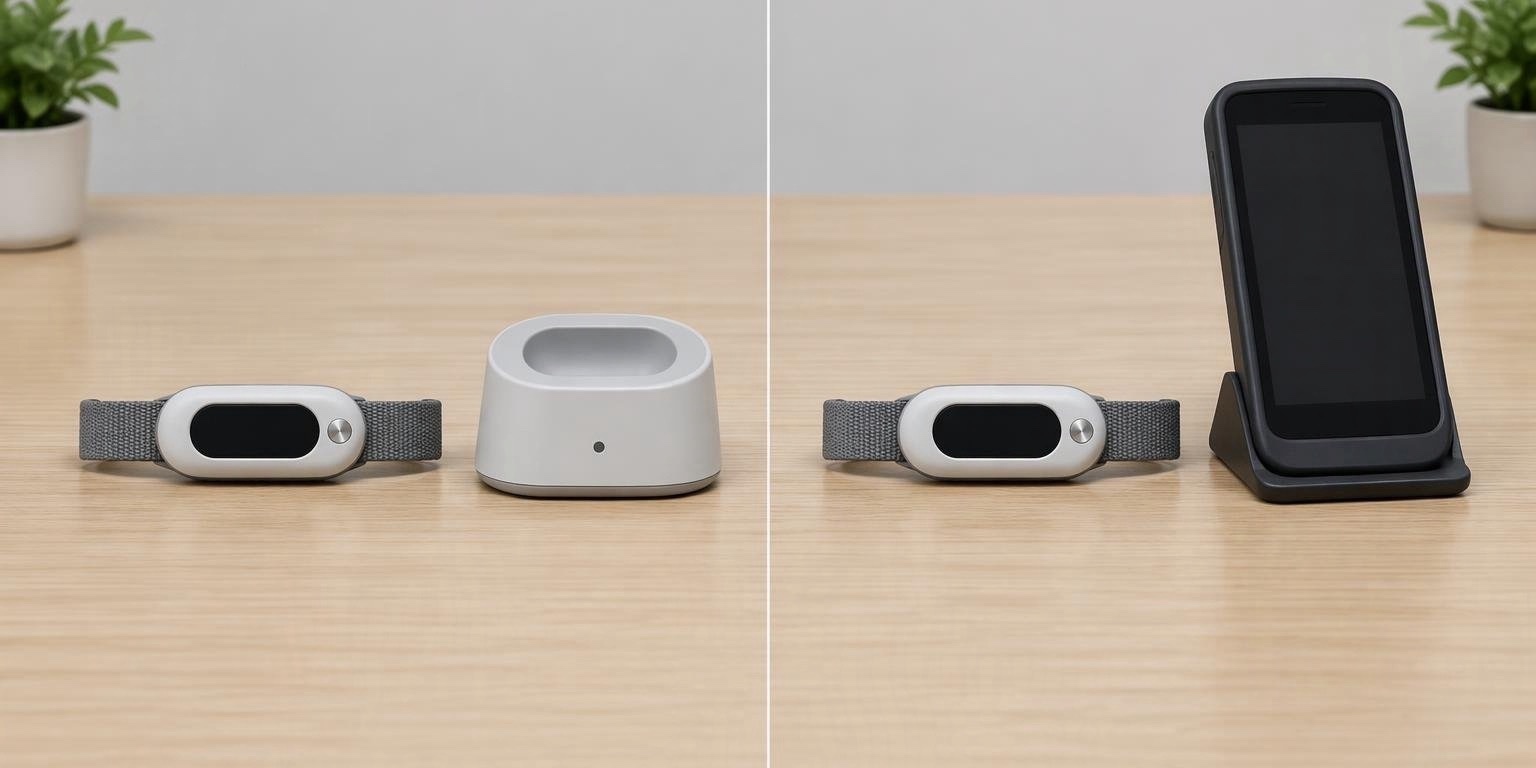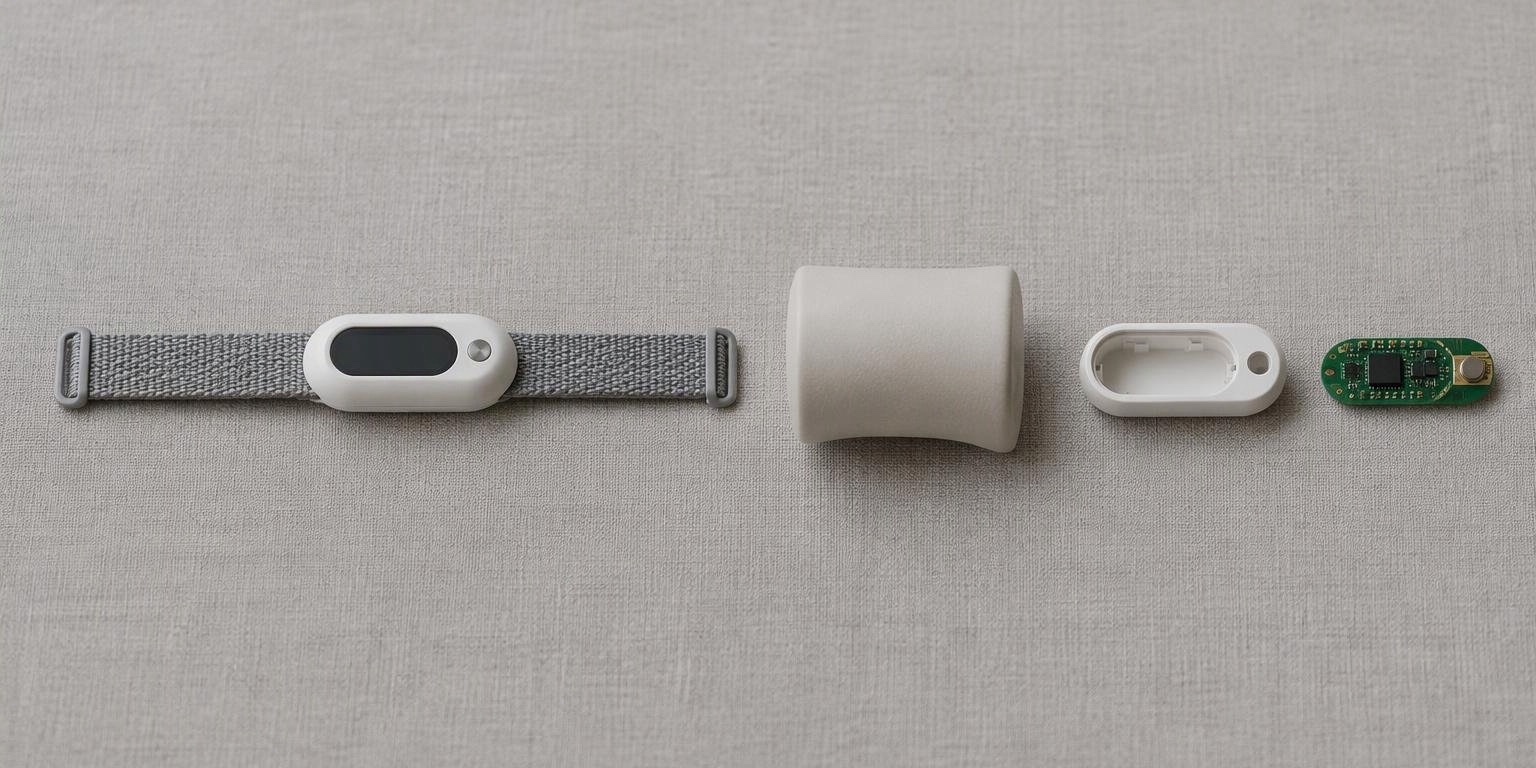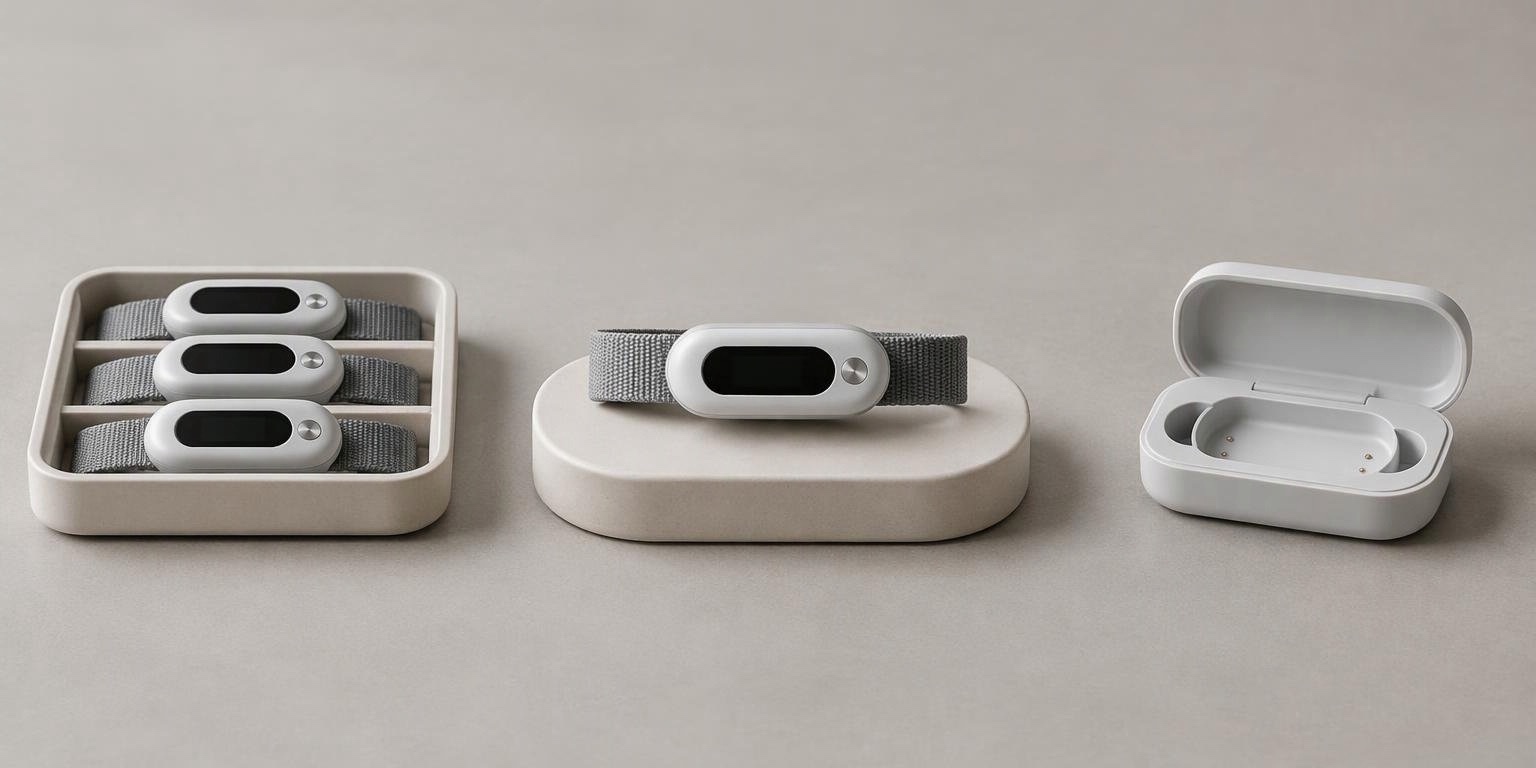
At NexPCB, we recommend comparing wearable hardware engineering quotes against the same scope of work before comparing price. For each line, ask what the engineering team will do, what you need to supply, what you’ll receive, and what will show the work is done. Give any work left out of the quote a named owner. A quote for a board that runs on the bench buys something different from a quote for a wearable that works with its intended host.
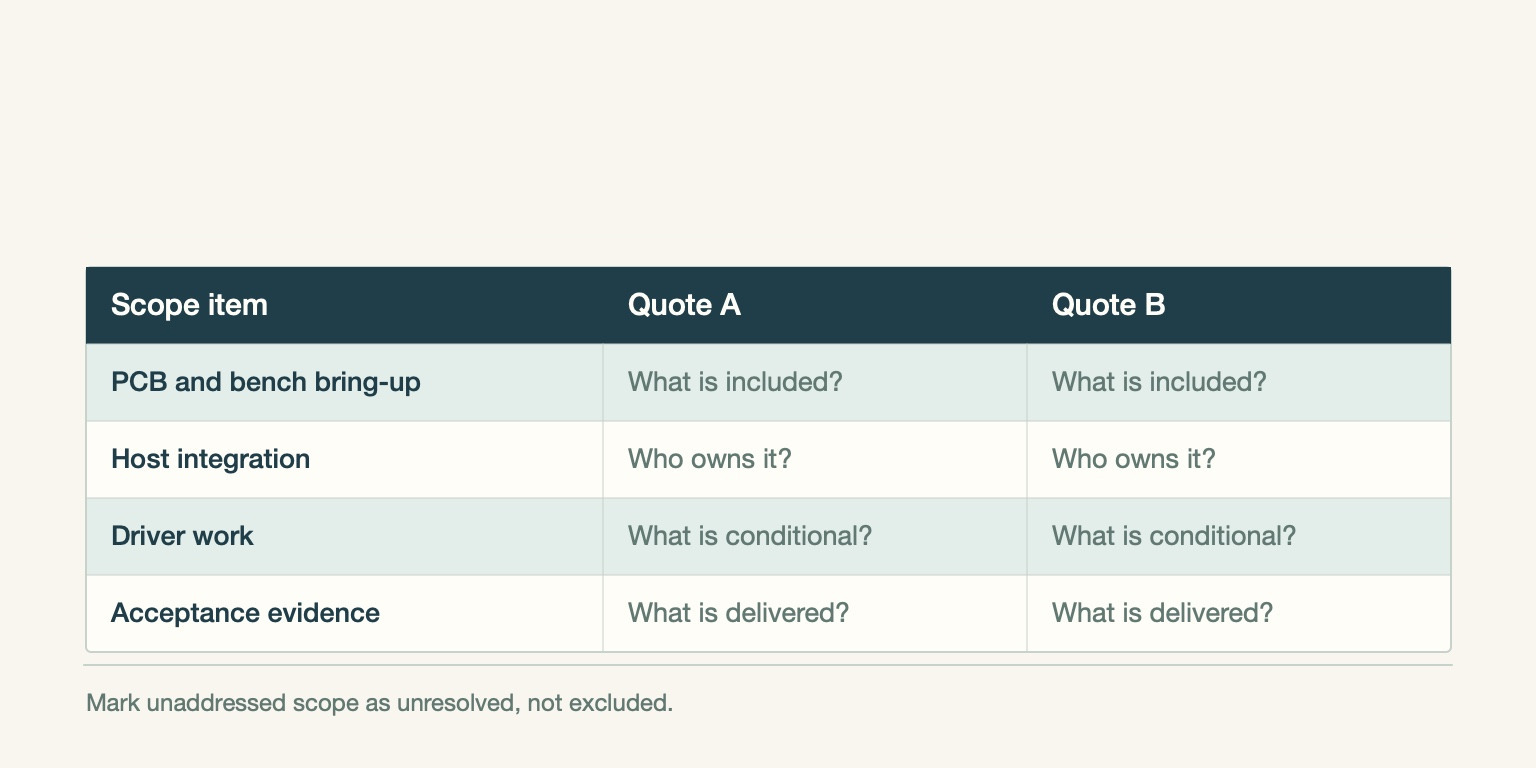
How do you put two quotes on the same scope basis?
Start with the version of the product you want the team to build or test. Share the use case, available design files, interfaces, and the checks you expect that version to pass. Our wearable engineering services describe activities such as board layout, design for manufacturability, and testing. Our engineering acceleration services distinguish inputs such as product design files and test requirements from work such as prototype iteration and pilot testing. In a quote, those activities need named outputs and a way to review them.
Use the rows below as a starting point. Mark each row included, excluded, or conditional, and name the responsible team. If a proposal is silent, mark it unresolved rather than assuming the work is covered or excluded. Record the scope against a specific product revision and ask suppliers which inputs they need up front. For example, if the enclosure is still changing, ask both teams what mechanical dimensions they’re assuming and which layout work would need to be priced again if those dimensions change.
| Work to price | What you provide | Deliverable and acceptance evidence to ask for | Exclusions or dependencies to clarify |
|---|---|---|---|
| Schematic and PCB layout | Circuit requirements, mechanical envelope, and known component choices | Agreed schematic and layout outputs at identified revisions; review against the supplied requirements | Editable source files, fabrication outputs, enclosure changes, and design review rounds |
| Board bring-up and basic test setup | Target board, interfaces to exercise, and checks you want run | Setup instructions or agreed test assets; a record of the specified bench checks if execution is included | Prototype units, fixtures, bring-up code, or testing beyond the named checks |
| Driver and host software | Chip and SDK version; target host and interface requirements | Named software deliverables and a demonstration of the specified functions on the agreed hardware and host | Custom driver development, host-side code, and ongoing maintenance |
| System integration | Target device configuration, software versions, and workflows to exercise | Results from an agreed end-to-end test, with the tested configuration and unresolved failures recorded | Enclosure or app changes and responsibility for debugging across teams |
| Certification-related work | Intended markets, product configuration, and known compliance targets | Named artifacts such as a pre-compliance record or lab report, according to the quoted work | Lab booking, fees, samples, formal submissions, redesign, and retesting |
Clarify what the SDK, integration and certification lines cover
In one anonymous wearable hardware example, the proposed pre-quote scope covered the schematic, PCB layout, and basic test setup. Driver work depended on what the Texas Instruments (TI) software development kit (SDK) could support. The example illustrates how to define scope before quoting, not the terms of a signed contract. If the SDK did not cover a required function, who would write the custom driver and how would that work be priced?
For a quote with that dependency, ask which SDK components the team expects to reuse, whether their licenses cover the intended use and distribution, and who will verify that those components support the required functions on the target board. Clarify whether custom driver work, host software, or system integration is included, and identify who would own each item if needed. For example, a bench check might show that the board can read a sensor; an integration check might show that the intended host receives and uses the reading in the agreed workflow. For certification-related work, ask separately who prepares test samples, coordinates with the lab, handles any required submission, and takes on fixes or retesting if needed.
Compare the revised quotes before choosing
If one quote ends with board bring-up and another includes integration on your host, ask both teams to price the same endpoint or show the extra work as a separate line. Capture any work your team would take on, the input needed before each team can start, and what change to the agreed configuration would trigger a revised quote. For tasks split between teams, ask who supplies the first test build, who runs the shared test, and who investigates a failed handoff. A supplier can finish its part while the end-to-end test still has no owner.
If a supplier offers several design reviews, check whether those reviews include layout revisions or just feedback. Compare the revised quotes against the same assumptions, including which third-party costs are separate. Once the scope is agreed, use our wearable engineering deliverables guide to review the package at handover. If the scope includes a factory transfer, also agree who executes, investigates, and accepts work in contract manufacturing.
Frequently asked questions
Does basic test setup include system integration?
Basic setup can cover preparing the bench to run named checks. If you need system integration, ask the quote to name the device and host configuration, the workflow to exercise, and the record that will show the result.
How do you compare an SDK-dependent driver estimate?
Separate the work priced on SDK reuse from any custom work. Compare the proposed components, license coverage for your intended use and distribution, and who will verify the required functions on the target board. Ask what finding would trigger a revised estimate.
Is product firmware included in a hardware engineering quote?
Check the named deliverables and acceptance test. A quote can include a diagnostic load for bench checks without including firmware for the finished device. If the proposal is silent, mark firmware scope unresolved and ask who supplies it, which functions are covered, and who verifies them.
Bring the unresolved scope to your next quote discussion
Bring your product brief, the proposed scope, and any rows without an owner to Accelerate Now. We can discuss those boundaries and an NDA before you share detailed design records.