After fixing a hardware reliability test failure, repeat the test clauses the failure or correction could affect. That includes the original failed check, any results invalidated by the setup, and any requirements the fix could change. Keep earlier results where the original run was valid and you can explain why the result still applies. At NexPCB, we suggest recording that decision against each clause rather than deciding whether to rerun the whole plan up front.
Was the failure in the setup or the hardware?
If the test setup was wrong, identify what the discrepancy invalidated. Compare the actual run with the approved method: what the fixture held, what exposure the unit received, and what the instruments recorded. If a logging problem affected a reading but not the stress applied to the unit, those are separate findings. If the setup changed the stress, check what the unit actually experienced before deciding whether to reuse it. Rerun the affected measurement or sequence under the corrected conditions. A passing rerun does not, by itself, establish that the first result came from a setup error.
If the product changed, test the configuration the correction is meant to represent. Record what changed and how to identify a unit that incorporates it. Repeat the failed clause on a representative unit under the applicable conditions and acceptance criteria. Then ask which other requirements depend on the changed part, interface, material, manufacturing step or operating behavior. An earlier pass on the old configuration may still be useful, but the revision label alone tells you neither which results to keep nor which tests to repeat.
Test clauses affected by the correction
Start with the failed or invalidated clause. Note the requirement, test method and acceptance criteria, then identify the condition that made fresh evidence necessary. Check adjacent clauses for a specific dependency: did they use the same fixture or measurement channel? Does the correction change how parts fit together, how heat leaves the unit, or how the wearable behaves under load? Add a test because of a connection to the correction or discrepancy, not just because it sits next to the failed test in the plan.
Check dependencies between test steps as well. If a functional check is meant to show how the unit behaves after a defined exposure, running that check by itself does not establish performance after the exposure. Use the project method to decide whether you can repeat a segment or need to repeat the sequence on a suitable unit. A focused rerun makes sense if you can bound the effect and the applicable requirements allow it. If several checks share an unreliable setup or you cannot separate the fix from effects elsewhere in the device, broaden the review and identify the additional tests needed to resolve those effects.
How should you allocate samples for the retest?
If the approved plan separates drop and environmental exposure to isolate their effects, keep the drop units out of environmental tests and the environmental units out of drop tests. Mechanical damage on a previously dropped enclosure can change how it responds to a later exposure; damage that appears after both stresses is harder to attribute. If the requirement specifically calls for combined stresses, use the prescribed sequence and identify those units separately. Do not borrow a unit from the other group without checking its exposure history and what the result is meant to establish.
Record a baseline before exposure, monitor the conditions and observations at the planned points during the test, and perform the full set of required checks for that stage afterward. If the unit recovers before the final inspection, retain the during-test observation alongside the post-stage result. The two outcomes answer different questions. For example, if a switch operates after the unit returns to its normal condition but stopped responding during the prescribed exposure, the recovery does not erase the earlier observation. Keep sample identifiers with the records so reviewers can tell which exposures and checks each unit actually received.
Section 3 of our eight checks for wearable mass-production readiness gives an example of this reasoning during production ramp-up, not design validation testing (DVT). A supplier and the factory initially obtained different adhesion results on a housing. The disagreement made the comparison itself part of the investigation: align the method, tape, conditioning, sample location, and acceptance criteria before judging whether the results agree. The team investigated the process, made adjustments, and retested. The record then supported a decision about the affected batch, containment, and longer-term action. Apply the same reasoning to a design-validation discrepancy: align the method before comparing results, keep the original observation, and record what the retest establishes and what remains open.
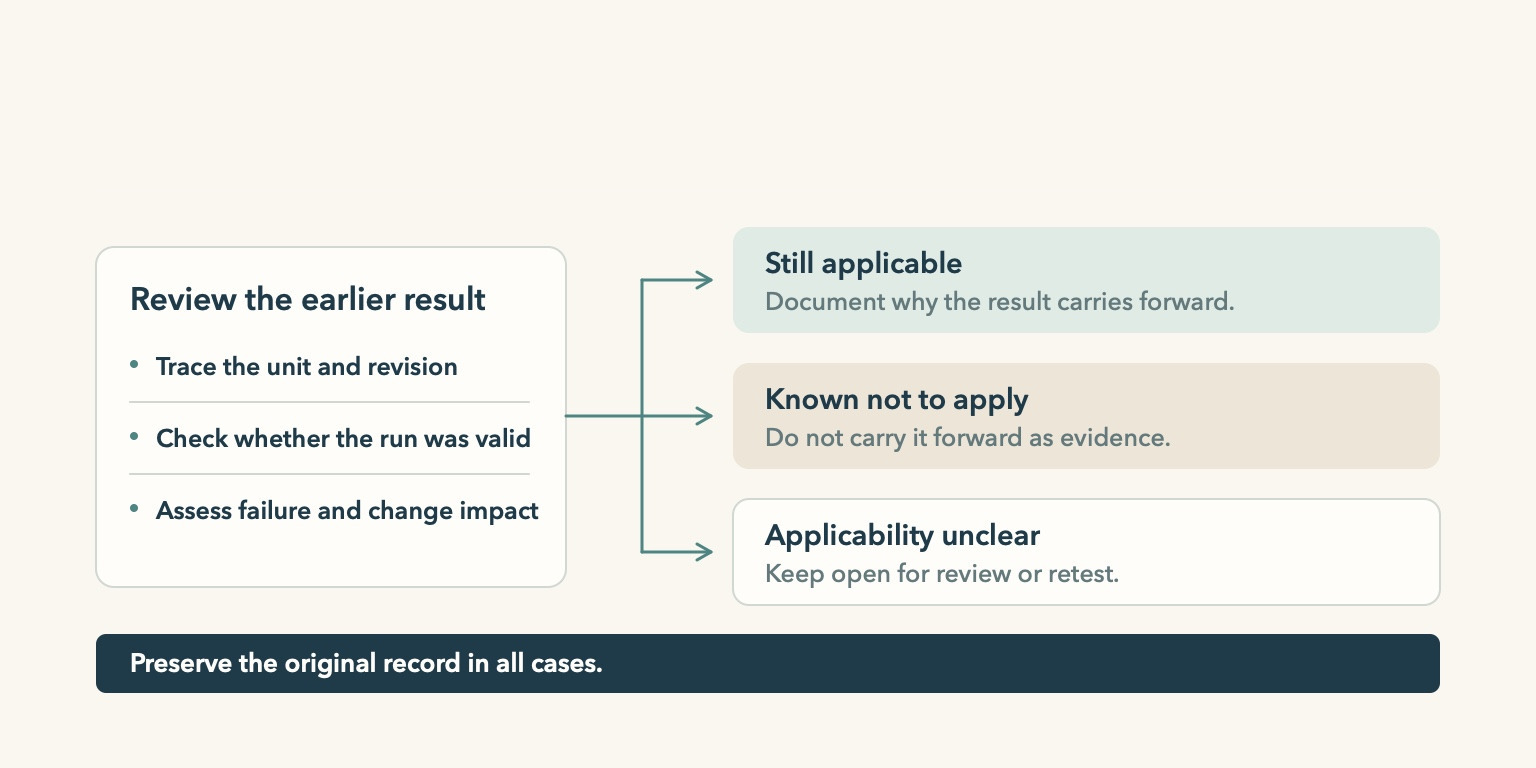
Earlier results you can retain
Keep an earlier result when you can trace it to the tested unit and revision, show the run was valid, and explain why neither the failure nor the correction changes what it demonstrates. Record the reason for retaining each result. If you cannot establish the earlier conditions or rule out a credible effect, flag the result as open until a review or a new test resolves it. Keep the original record, including an invalidated or failed run, so the reviewer can see why a new result was needed.
A retest list is easiest to review when each entry records:
- Clause and dependency: the requirement, the failure or change, and how they are connected.
- Decision: repeat the check or sequence, retain the previous result with a reason, or hold the decision pending a named piece of evidence.
- Evidence: the earlier result and tested configuration, or the planned unit, method and acceptance criteria for the rerun. Link the new result after the test.
For the later release decision, our guide to what a passed sample still has to prove explains why a passing sample and the records that cover the batch answer different questions.
Frequently asked questions
Do I need to rerun the whole reliability plan after a fix?
Start with the failed or invalidated test clauses and those that depend on the change. Expand the scope if the effects cannot be isolated or the applicable test requirements call for a broader sequence.
Can a passed retest prove the first failure was a setup error?
A pass shows what happened under the retest conditions. To attribute the first failure to the setup, identify the original discrepancy and show how it could have produced the result.
Which earlier results can I keep after a design change?
Keep results from valid runs when you can identify the tested configuration and show that the change does not affect the requirement, test method, or conditions that made the result applicable.
Bring the failure record and the affected test clauses
If this comes up during DVT on a wearable hardware project, bring the failure record, the proposed correction and the applicable test clauses. Use Accelerate Now to discuss which checks need fresh evidence and what can carry forward. If you need to share detailed test records, ask about an NDA first.