At NexPCB, we start a hardware New Product Introduction (NPI) cost and schedule discussion by separating the cost of getting ready from the cost of building another unit. Then we put each build or review on the schedule with the output it needs to produce. For a wearable hardware program, a finished fixture, a buildable enclosure, and a tested batch are different outputs. Combining them into one cost or date hides the decisions they are meant to support.
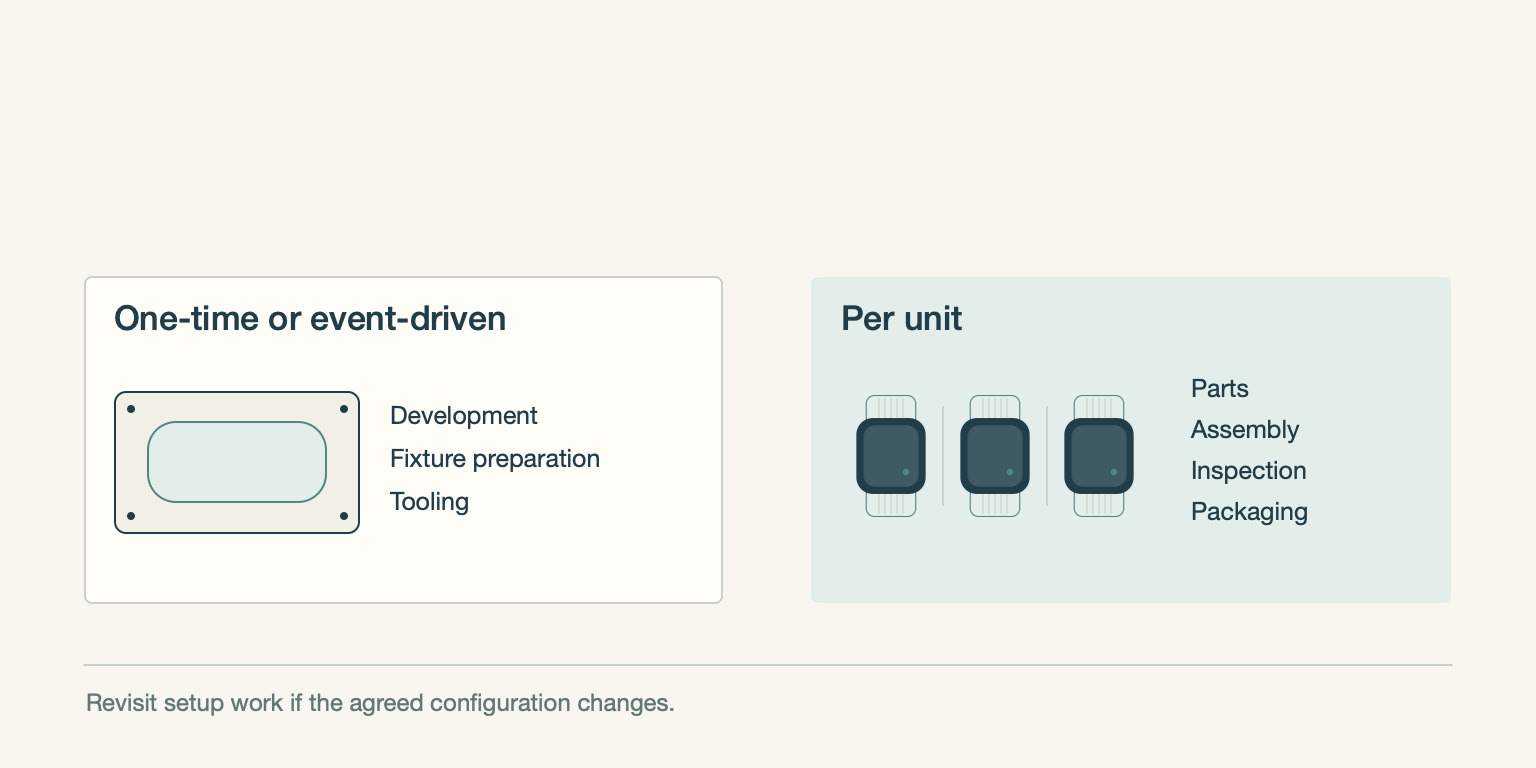
Which costs are one-time, per build, or per unit?
Development, fixture preparation, and tooling have different cost triggers from parts, assembly, inspection, and packaging. Put engineering and tooling in the non-recurring or event-driven part of the plan. Put recurring costs against the build and configuration that incur them. Keep setup work visible: it may recur for a new run even if nothing changes on the product. This separation helps you see whether a revision adds a development task, creates another build, or changes the operations performed on a unit.
| Plan this separately | Typical activity to identify | What can change the plan |
|---|---|---|
| Engineering and trial work | A prototype revision, design review, or targeted verification | New findings can require a design change or a retest. |
| Fixture or tooling preparation | Work to make or adapt a tool, test fixture, or assembly aid | The next configuration may change how the tool locates or checks the assembly. |
| Build-level services | Setup, a trial run, or another activity performed once for the batch | A new run can incur setup again even when it uses the same design. |
| Units and build execution | Parts, assembly, inspection, and packaging for a defined batch | Quantity, variant, and the agreed operations change what is repeated. |
Record what each cost buys
For a fixture, name the assembly state it supports and the operation it enables. A manual holder for examining a prototype and a production test fixture may hold the same device, but the second may need to position it consistently for the intended check. For a design update, identify the finding it is meant to address and which evidence the team will review afterward. The output beside the cost gives the next reviewer something concrete to defer, approve, or ask to have priced separately.
A partner may propose recovering fixture costs through the unit price. For comparison, ask to see the preparation cost and the cost of running a unit separately, along with the quantity assumption behind the proposal. If a fixture must be modified for a revised configuration, show that as a new preparation task rather than assuming the old amount covers it. Conversely, if a variant needs a different setup but uses the same operations per unit, put the difference against that build rather than changing the cost of every unit.
If a quote covers the preparation work but leaves repeat trials unpriced, list the conditions that would require another run before comparing it with a broader quote. A run repeated because the setup was invalid may use the same design and material; a run repeated because a component changed may also need revised instructions and inspection. Keep those assumptions beside the estimate so a reviewer can ask about the right difference rather than comparing provisional totals as if both suppliers priced the same work.
Assign samples and sourcing work to the right activity
A pilot can produce samples for different purposes: process learning, a design check, or a review. Mark which checks change or consume their samples and which units need to be held or handed over in their original condition. Material consumed in a trial still belongs in the build plan, but counting all output as interchangeable can hide the need for more units to collect the agreed evidence. Ask which records need those units and what condition the samples should be in afterward.
Review of an alternate part is also separate from buying it for a run. If the intended part may be unavailable, identify which work can proceed with sample material and which decision depends on the production-intent configuration. Existing stock may support a fixture fit check but not show that the planned process works with the alternate. Price the comparison or approval work as its own activity if it is needed. Update the material line when the part choice is settled for the build, not as a substitute for settling it.
Schedule by the evidence each hardware stage produces
Give each milestone an output the next team can use. A prototype iteration might return a revised sample and the outcome of a targeted check. A pilot might return units, inspection and test records, and a disposition for outstanding actions. An intended production tool or process needs evidence from the applicable trial, not merely a delivery date for the tool. The guide to NPI in electronics explains the handoff between engineering and production.
Our Engineering Acceleration (NTI) service covers s1 prototype iteration and s2 pilot run on the Hardware Innovation Curve. The NTI FAQ describes most products on that path taking one to three design spins from s1 to a pilot-ready design; the checks still open on your project determine what you schedule. The curve places s3 NPI tooling and s4 ramp-up under Production Delivery (NPI). Use those names to distinguish work that settles the design or pilot evidence from production work that relies on it.
| Hardware work under review | Input to name | Output the next activity will use |
|---|---|---|
| Prototype iteration | Design question, current configuration, and findings that prompted the change | Revised sample and a record of what the revision showed. |
| Pilot preparation and run | Buildable configuration, material, fixture or assembly setup, and test requirements | Pilot build record, results, and open actions connected to that configuration. |
| Tooling introduction | Approved configuration and the relevant execution or acceptance requirements | Tooling trial evidence for the applicable features or operations. |
| Ramp-up | Process inputs and the issues carried forward | Production build records showing how the intended process performed and what needs more work. |
Separate input readiness from acceptance
For each dependency, identify the input, its required state, who provides it, and when the activity needs it. “Housing” is less useful than an approved assembly revision or a representative sample with the feature the fixture locates against. A mechanical trial may need parts on hand while a test reviewer can draft instructions from an approved drawing. Show which preparation can run in parallel and which work waits for a released input.
Put the acceptance review on a separate line when a downstream task depends on the decision. A review can accept unchanged work while keeping an affected check open. If a drawing update changes an assembly operation but leaves an unrelated electrical test valid, retain the electrical evidence and schedule the affected operation. If the pilot can proceed only for fit evaluation, agree whether to run that narrower build and schedule the missing verification separately or move the pilot and preserve its intended scope. The first choice changes what the build can deliver; the second changes when the same evidence will be available.
Example: the pilot fixture locates on a changed feature
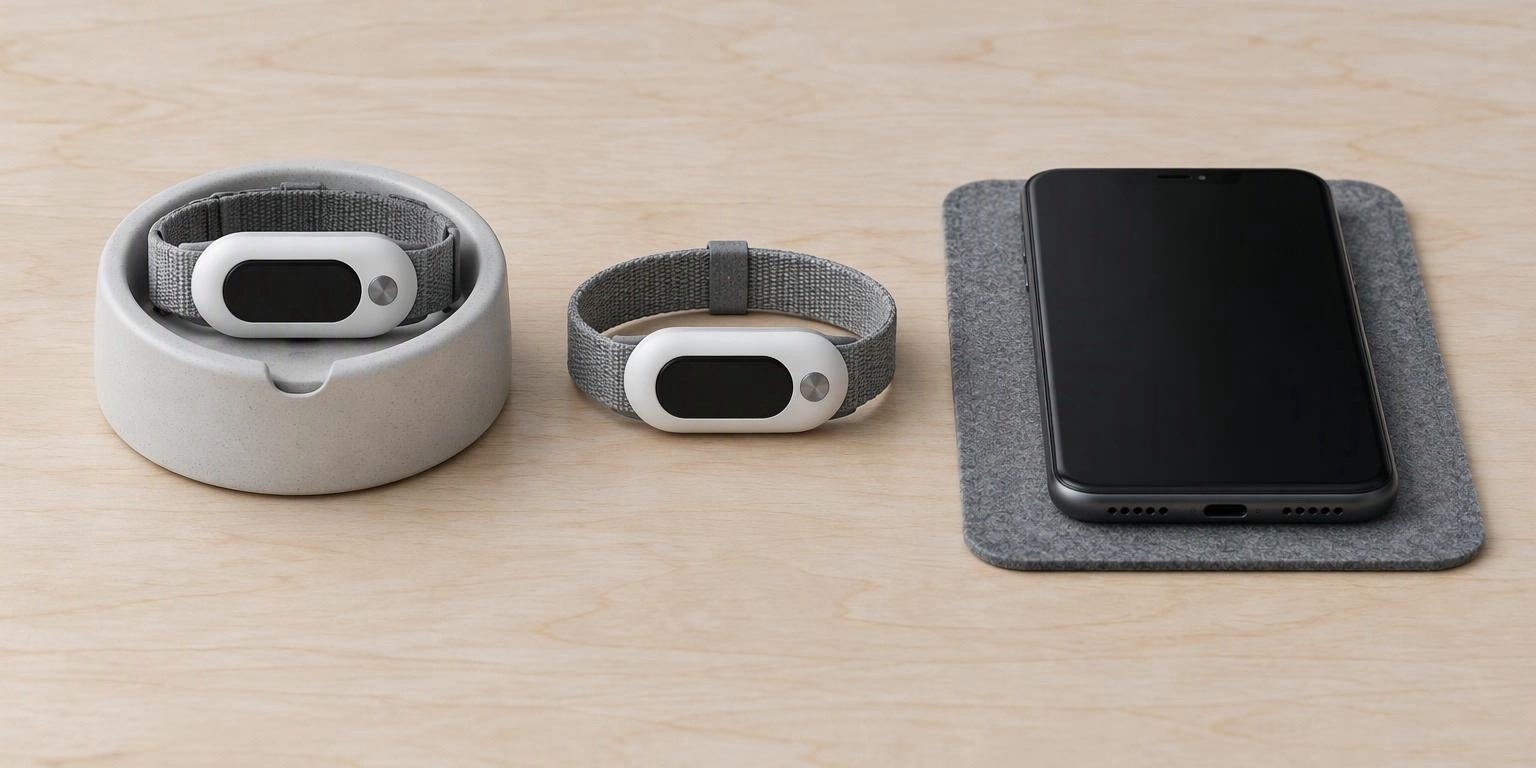
Suppose a wearable’s enclosure is approved for a trial, but the prototype fixture locates on a feature that changed. First check whether the current fixture can hold the intended assembly for the operation the pilot will evaluate. If it needs an adjustment, plan the fixture work and a check of the revised setup. If the change also alters what the test needs to measure, review the test requirement separately. The fixture’s readiness and the pilot’s evidence are two different outputs.
Then identify what can still proceed. You may be able to verify parts or prepare assembly instructions while the fixture is being adapted. If the pilot needs the fixture to yield a usable test record, schedule that operation after verification of the setup. The next build record should identify the configuration and the fixture actually used so a later reviewer can distinguish preliminary assembly results from the intended verification.
If the trial exposes repeated manual alignment during closure, keep the baseline work distinct from the response. Diagnosis may add engineering time, a fixture comparison may add a setup, and a follow-up build may need more parts. Review the evidence before committing all three. A comparison of two inspection methods may be possible on existing units; a check of whether the approved assembly repeats a result without intervention may need new units built under the revised conditions.
Treat software as a hardware-test input where it affects the result
Where firmware or station software changes the behavior under review, name the board variant, loaded firmware, test program revision, and the date the required version can be used. A diagnostic load may be enough to establish that a board responds at the bench. A pilot meant to evaluate behavior with the device closed or with its intended host may rely on a different load. Record which result the version supports. For the technical sequence after bring-up, see wearable firmware and hardware integration after power-up.
Treat the test version as a dependency of the affected operation, not as a reason to move unrelated hardware work. If the software is unavailable, identify whether mechanical preparation or assembly learning can proceed and leave the dependent functional check open. If the version changes after a trial, a mechanical inspection may still apply while a functional or power measurement needs repeating. In a cost review, show any station preparation or repeat operation beside the revised test; if an additional build is necessary, show its material and execution costs separately.
What should change in the plan after a build review?
Update the first output the next activity can no longer rely on. A retest to correct an invalid setup, a redesign to address an assembly problem, and a hold while an alternate part is reviewed are different events. Each should have its own configuration, owner, next decision, and link to the downstream work affected. Preserve the earlier result where it still helps the comparison, but mark whether it is usable for the new configuration. If the plan changes because of an unresolved assumption, label the resulting work as an option until there is a decision to proceed.
At the review, compare the revised entry with its baseline: what work changed, what stays usable, and what output now has a different cost or date? If the team will need more units, name the checks that require them. If the change is to setup only, identify the preparation and verification that make the existing build plan viable. Record who can accept the output and who will use it. The person providing a fixture, sample, or program may not be the person approving its use for the next milestone.
If a trial crosses two teams, distinguish the date a supplier can send an input from the date the next team can work with it. A drawing can arrive before the matching inspection limits, and a delivered fixture can still be waiting for the reference part used to verify its setup. On the schedule, assign an owner to each handover and write down what the receiving team will compare. If the dates separate, follow the dependency to the operation that needs the combined inputs. A revised timeline can then show whether the team is moving the affected operation, changing the scope of the run, or keeping part of the work on the earlier date. Apply the same split to the estimate: separate any repeated setup and inspection work from engineering time spent completing the missing input. That keeps a delayed handover from being mistaken for a change in the unit cost.
Frequently asked questions
Should a fixture be amortized into unit cost?
The quote may recover the fixture through an order, depending on the commercial terms. In the planning view, keep preparation and per-unit execution visible separately. Ask what volume the pricing assumes and what happens if the fixture changes or a later run uses it again.
What slips when a pilot fixture locates on a changed feature?
Review fit on the intended assembly and schedule any fixture adjustment and setup verification before the dependent operation. If some work can proceed without that setup, keep it on the schedule and record the scope of any early build. An early fit or assembly record does not replace the intended verification.
How do I plan for a possible additional design spin?
Name the condition the present build is checking, what finding would justify a change, and the work that change might trigger. Keep that work visible as a contingency rather than pricing or scheduling the additional build as if the decision were already made.
Should firmware have its own task on the hardware schedule?
If a hardware check depends on a particular software or station version, name the version, supplier, availability, and affected operation on that activity. The underlying software development can stay in its own plan.
Bring the build decision, not just the budget total
Take your current stage, the next evidence you need, and the work you consider non-recurring to Accelerate Now. We can discuss which inputs shape the schedule and which work belongs with the stage or the units. Ask about an NDA if detailed build or design information is needed for that discussion.