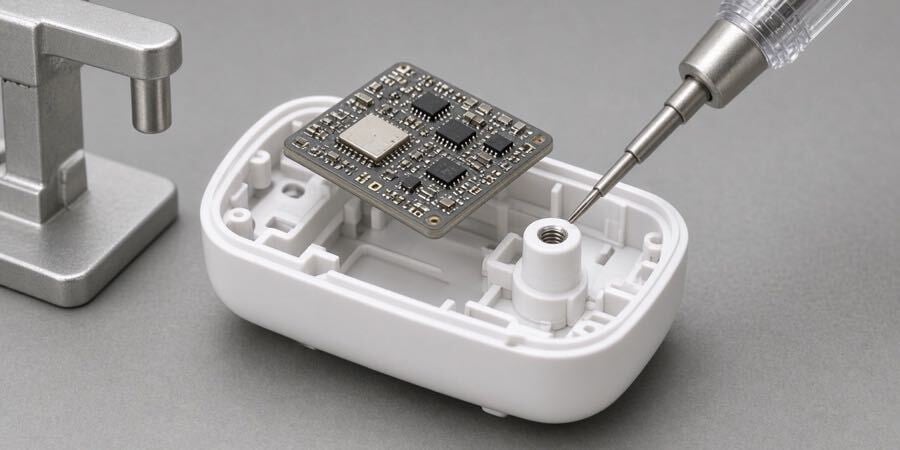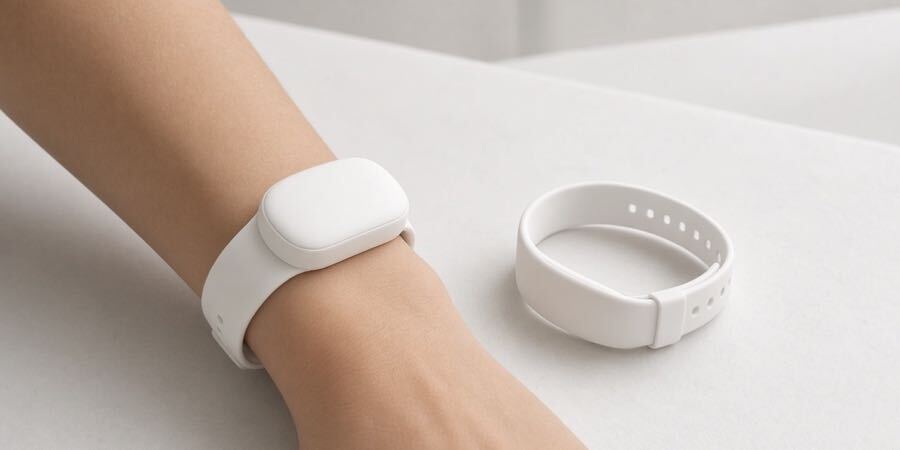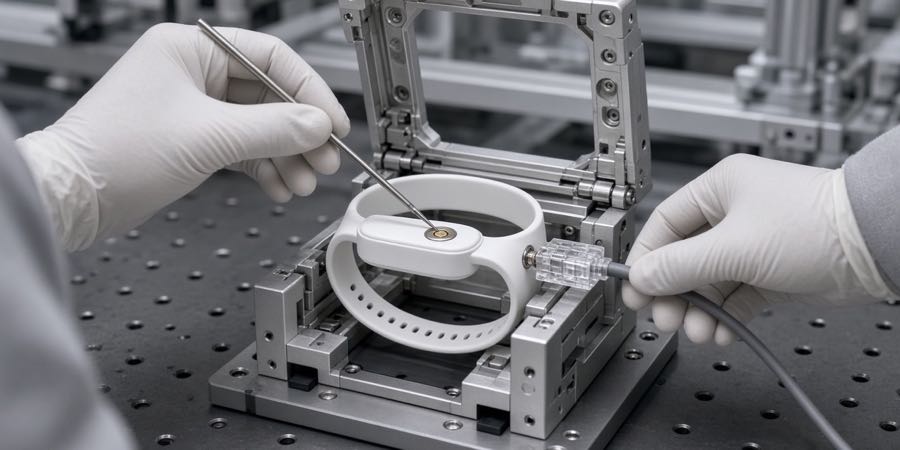
A wearable assembly DFM review looks at fit, tolerances, process constraints, assembly sequence, and test access before a tool is committed. We focus on tool access and fixture interference as part of that broader review. At NexPCB we walk the assembly in order and stop on the step a tool cannot reach or a part cannot meet. Concept development and initial prototypes are supported through Innovation Consulting. Prototype iteration and DFX review continue through Engineering Acceleration, while tooling trials and ramp preparation are supported through Production Delivery. Our wearable solutions are the wider build.
What the review forces you to decide
Walk the assembly in the order it will actually happen.
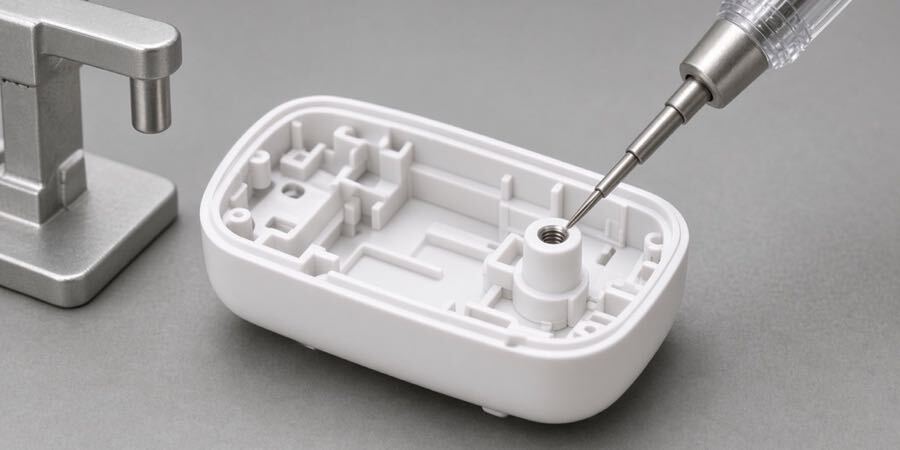
Reach comes first. A screw the driver cannot approach, because the fixture or the boss is in the way, will be installed by feel. That unit then depends on the person. The decision is to move the boss, open the fixture, or change the order of the screws. Leaving the interference in place means the tool will copy it.
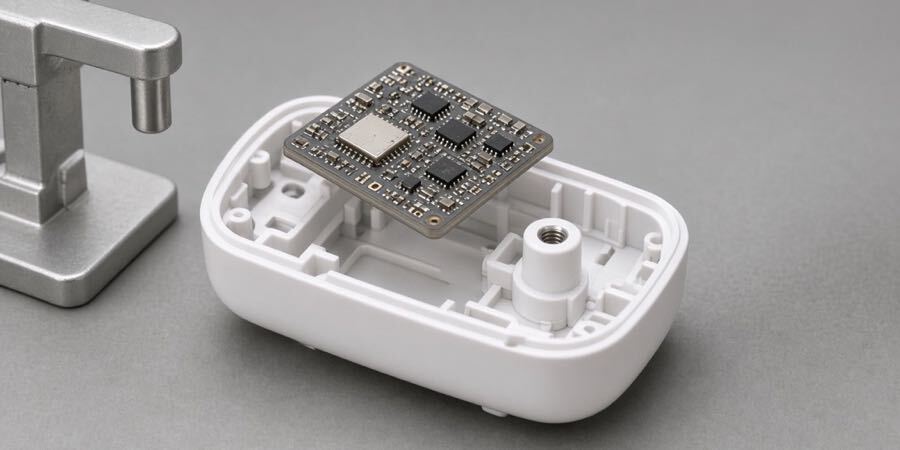
Fit comes with reach. The board outline and the housing opening have to meet, including the connector and the seal. A part that fits in the hand can miss once the housing is the reference. The decision is a change to the opening or to the board edge, made before the tool is cut.
The closed unit still has a function to retest. A joint that moved during fastening can move a channel, a button, or a seal. The review names that function and the check that follows the screws. A bridge process, such as a short-run housing route, is a different conversation. Tool access and fixture interference sit inside a broader assembly DFM review that also considers fit, tolerances, process constraints, assembly sequence, and test access.
How a wearable assembly DFM review proceeds
| Review question | The decision it forces | What you bring |
|---|---|---|
| Can the driver reach the screw? | Move the boss, open the fixture, or change the screw order. | The housing section, the screw, and the driver. |
| Do the board and the housing meet? | Change the opening or the board edge before the tool is cut. | The board outline and the housing. |
| What does fastening disturb? | Name the function to retest on the closed unit. | The function that joint can move. |
| Which fix is it? | Say whether the change is design, fixture, or sequence. | The option you want to try first. |
The checks and the limits on a given program are set with that program's files.
What a pilot project found at the screw
A screw that has to be worked around is a design and fixture decision. Careful handling still has to leave the driver path blocked until the boss, the fixture, or the order changes.
On one wearable pilot, we had to work around fixture interference while installing screws. The finished unit depended on incoming geometry, fixture access, and visual judgment. The fixture interference highlighted risks in assembly access and process repeatability. The proposed move toward injection molding still required design refinement, tooling trials, assembly validation, and renewed optical and quality checks, as written in when a wearable pilot exposed the limits of prototype manufacturing.
Before your tool is committed, we check the driver path, the locating faces, and the screw order with you, and name which of those three has to change.
Frequently asked questions
What decision does a wearable assembly DFM review have to produce?
A change to the design, the fixture, or the sequence, on the step a tool cannot reach or two parts cannot meet, within a review that also covers fit, tolerances, process constraints, and test access. A note that says "assemble carefully" leaves that decision open.
How is this different from choosing a short-run process?
A short-run process is how you learn before a hard tool exists. This review asks whether the fixture and the tool can reach the work once you are about to commit them, and whether fit and sequence still hold. The two questions can share a housing and still need different decisions.
What to bring to the first conversation
Bring the structure files, the board outline, the assembly order, the fastener callout, and any fixture concept you already have. We then mark the interface that has to be decided before a tool or a fixed process is committed.
Share detailed design files once a non-disclosure agreement is in place. Start at our project inquiry form.