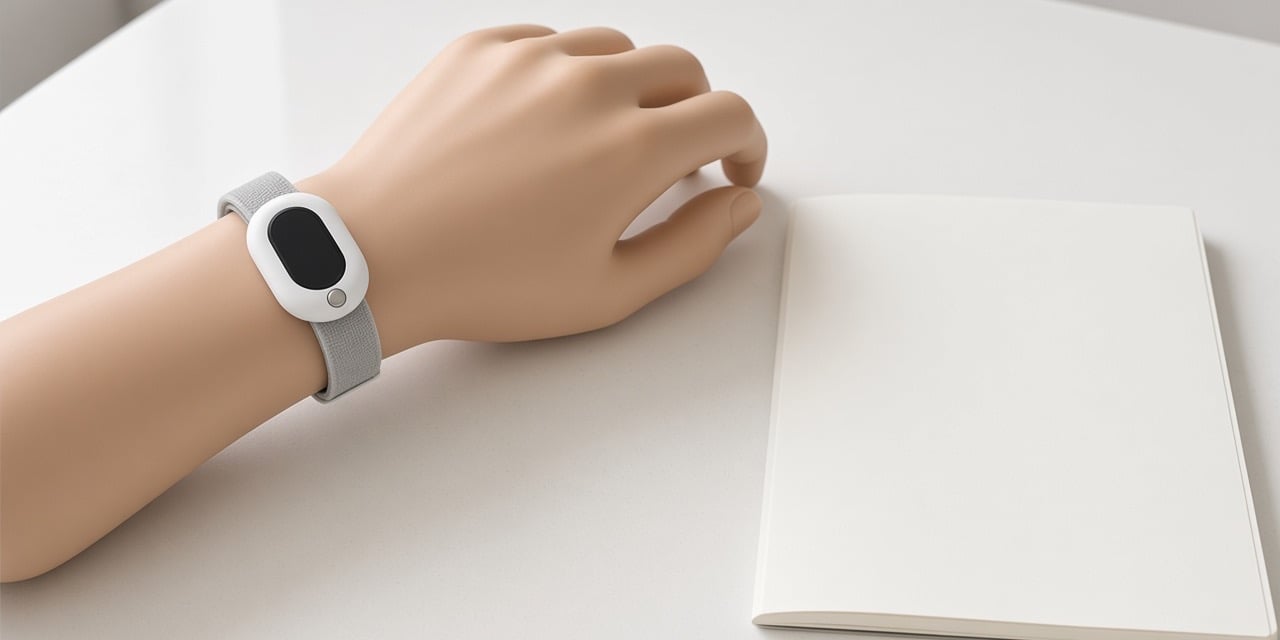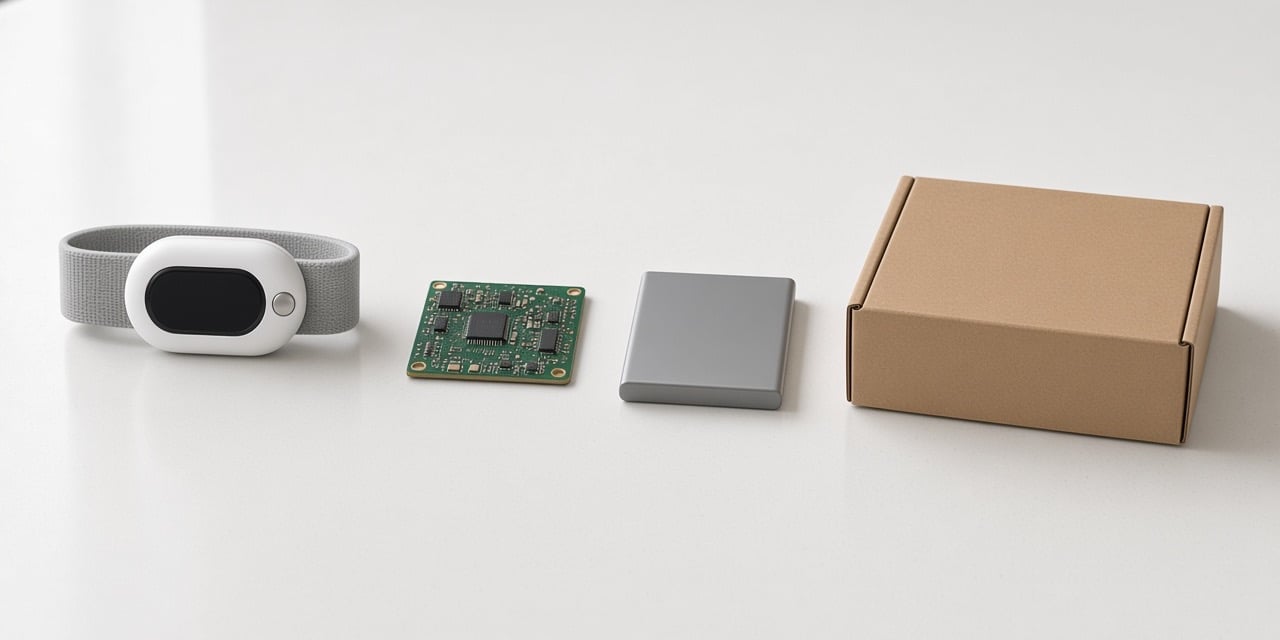
A wearable production test at NexPCB passes the points and limits in that project's specification and test guide. A pilot that only ticks the function still has to show the device after sweat, temperature, a drop, or a day of wear when that project's spec names those points. The next project writes its points and limits again. Design verification, pilot verification, and the line check, whether every unit or a sample, are three different lists.
A point whose condition is still incomplete is an example from that project. It is not yet a point that can be run the same way on the next build. Continuity still needs the nodes and the pass rule. The water sensor still needs the trigger and the output limit. Immersion still needs the depth, the time, and the check that follows. The two projects below are usable where each point already carries its condition.
What the production test is trying to hold
A functional tick answers for the bench. That tick is the board's own record. Sweat, temperature, a drop, and a day of wear are still open until the project's spec names the points that cover them. Whether the build repeats is the question after the tick.
Salt fog, temperature cycling, artificial sweat, drop, waterproofing, ultraviolet exposure, and high and low temperature are the public checks for skin and sweat, the worn environment, handling, water, and time outdoors. The pilot list is the subset that project's spec names. The points below are the ones two projects actually wrote down, with the limit sitting next to the point.
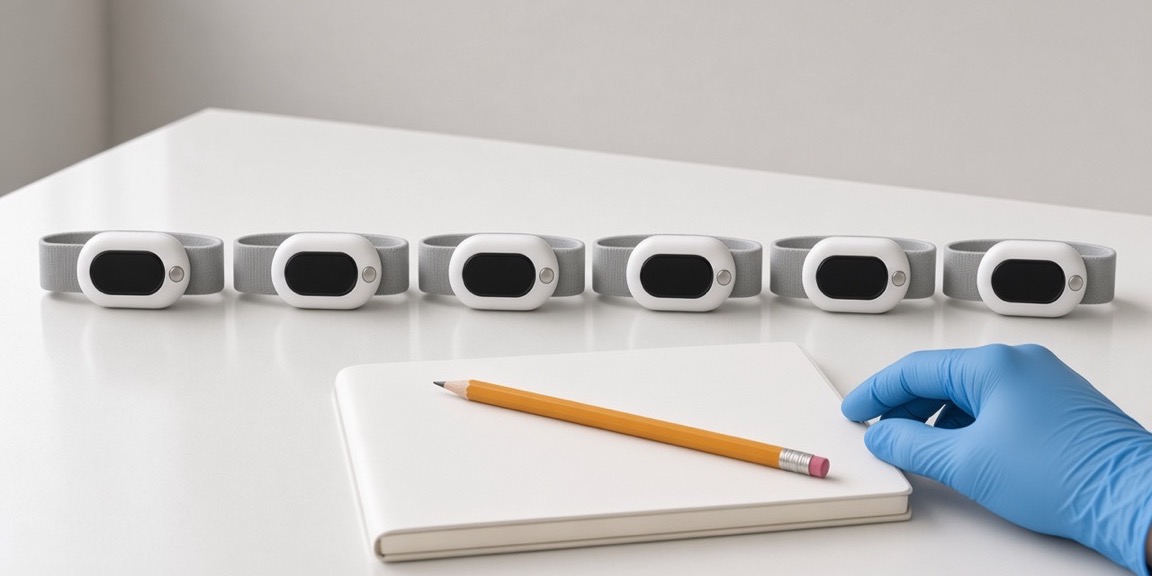
Test points and limits from two projects
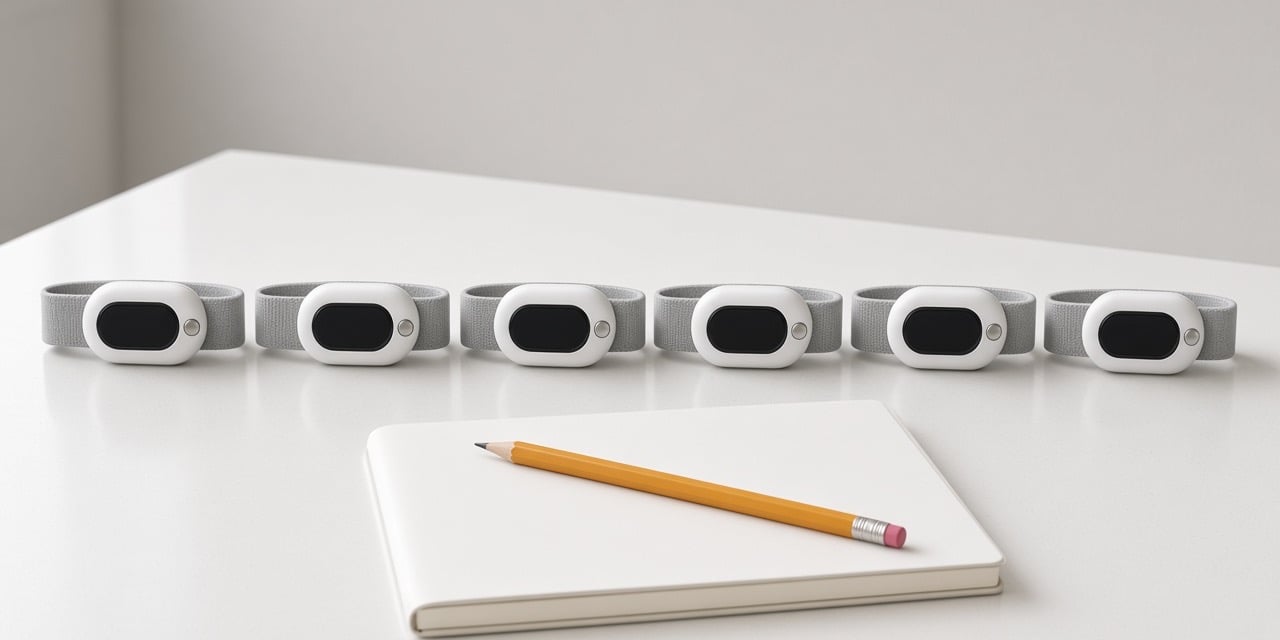
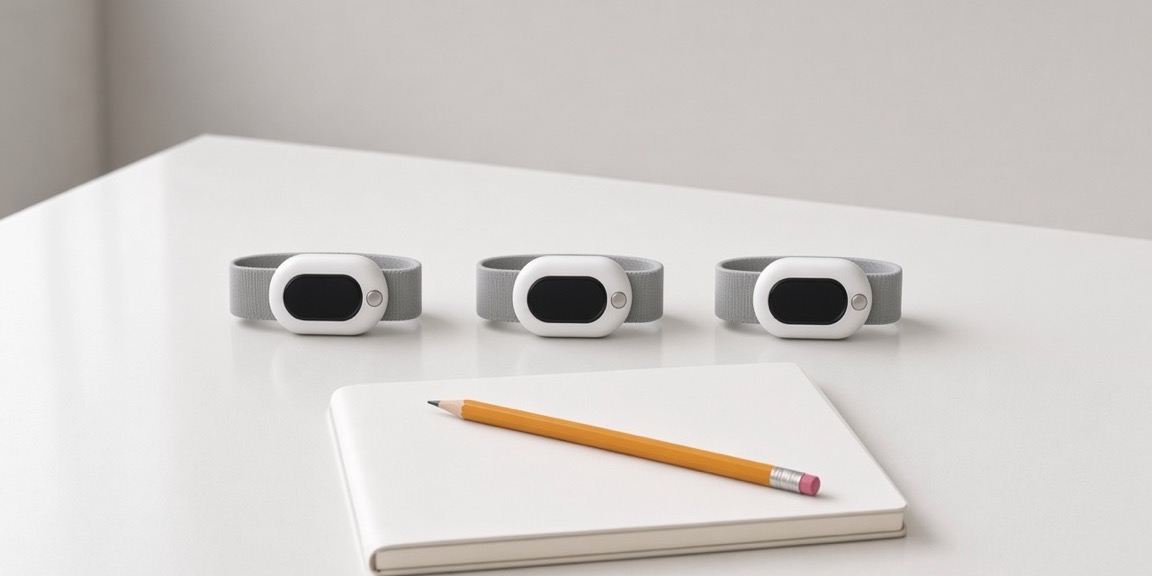
The row of finished trackers in the photograph is a concept of completed units. It does not show a production-test step, a fixture, or a measurement setup. The notebook beside them is blank. It is not the test record.
| Point | Condition written beside it | Where it was written |
|---|---|---|
| Continuity | The wristband circuit as built. The nodes and the pass rule are still open on this record | Swim-safety wristband |
| Water sensor | Before the adhesive, and again after it. The trigger and the output limit are still open | Same wristband, both sides of the adhesive |
| Immersion | 30 seconds. The depth and the check that follows are still open | The water check on that wristband |
| Strap seal | IP67 | The strap on that program |
| Base station | IP62, the target set for that housing | The base-station housing |
| Indicator | Off, as the last step | The smartwatch last step |
| Standby current | About 4.7 mA at 3.7 V on a 250 mAh cell, about two days. This is a standby estimate for that watch, not a worn or reporting measurement | The watch standby line |
| Cell limits | Charge cutoff 4.2 V, maximum charge 1C, standard charge 0.5C, discharge cutoff 3.0 V, internal-resistance cap from that cell specification | The watch cell specification |
On a swim-safety wristband the pilot points were continuity, a water-sensor check before the adhesive and again after it, a 30-second immersion, an IP67 strap, and an IP62 base station. Those two codes are enclosure codes in IEC 60529, written here as that project's targets.
On a smartwatch the last step was the indicator being off. Standby current was about 4.7 mA at 3.7 V against a 250 mAh cell, which works out to about two days. That figure is a theoretical estimate for the standby condition on that watch. It is not a measured runtime while the watch is worn, locating, or reporting. The cell limits came from the cell specification named for that watch: charge cutoff 4.2 V, maximum charge 1C, standard charge 0.5C, discharge cutoff 3.0 V, and an internal-resistance cap taken from that same cell specification. The cell model and the specification revision sit with that record. Full-charge voltage was checked against the specification. A later volume build uses its own readiness checks.
What the sample record keeps
The sample record counted passes, fails, and the rate. A failure went into the nonconforming process. The condition that makes a point repeatable is the next check.
What is hardest to repeat
The three finished trackers in the photograph are the same kind of concept row. They do not show the condition that makes a point repeatable.
The point that is hardest to repeat is the one whose condition was never written down. On a wearable, that condition is usually the temperature, the moisture, and the position against the skin. A pass in the lab can move once the device is worn a different way.
Write the condition next to the number before the pilot is called repeatable:
- A standby current carries the standby or the reporting condition, the voltage, and the cell.
- A waterproof check carries the immersion time, or the depth and the duration.
- A water-sensor check carries whether it was run before the adhesive, after it, or both.
- A wear-position check carries where the device sat on the body.
The swim-safety continuity, water-sensor, and immersion rows stay as examples from that project. They are not yet points that can be repeated, because the nodes, the trigger, the depth, and the following check are still open. The watch standby line is usable as an estimate because it names the standby condition, the voltage, and the cell. A current with no condition, or an immersion with no time, is not run the same way on the next build.
Frequently asked questions
Which points does a wearable pilot have to pass?
The points in that project's spec. The public environment checks run when that spec names them. They are not the list for every production test. On the swim-safety wristband, drop, life, and print tests stayed off the list.
What does the standby current have to name?
The standby or the reporting condition, the voltage, and the cell. On the watch, the figure in the body is a standby estimate for that watch. It is not a worn or reporting measurement.
What to bring to the first conversation
Bring the test guide, or the points you already know the pilot must pass, including the condition on each number. If a point is left off that project's list, say so. The cell specification comes across after a non-disclosure agreement. Start at our project inquiry form.