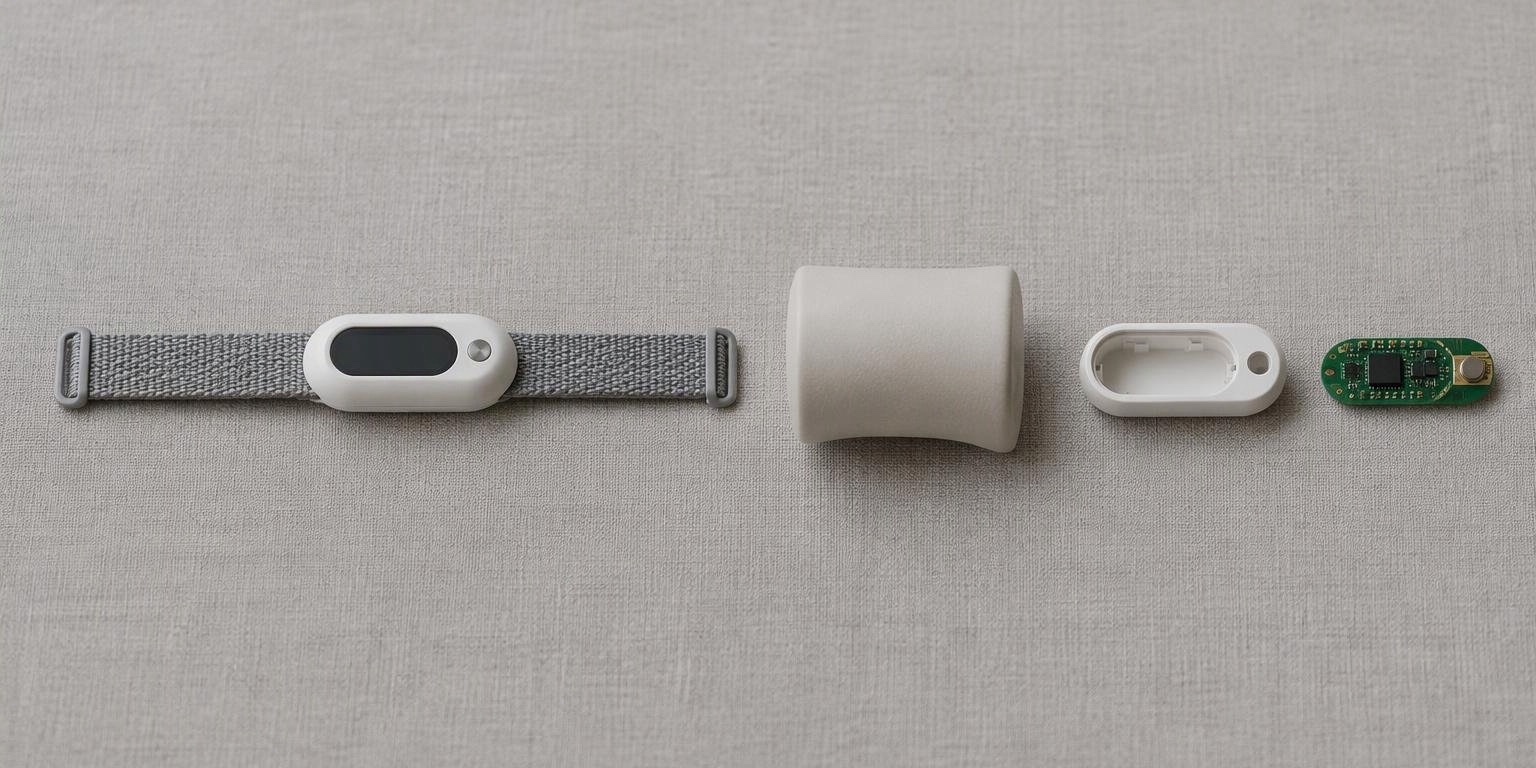
At NexPCB, we distinguish a passed test from authority to release a build. PVT stands for production validation testing; PVT sign-off is the documented decision about what can proceed on the strength of that evidence. For a wearable product, that means reviewing the intended configuration, how the build performed, and what remains open before recording the release.

What belongs in the release evidence
Start with the configuration the decision covers. Identify the product and assembly revisions, the material and tooling state that matter to the result, and the approved test requirements. Give the reviewer enough information to tell which units and conditions the supporting records represent. If a test passed on an earlier revision, note what changed and whether the original evidence still applies. Accepting the old result simply because the product name is unchanged can release a configuration the trial did not exercise.
The packet should connect repeated build and test results to findings from the run. Include the records that show the operation performed as intended, any deviations from the planned route, and how affected units were handled. A successful retest can show that a correction worked under the retest conditions. Preserve the first result and the change so the release review can judge whether the original concern was resolved or merely bypassed.
Keep the evidence tied to the requirement it answers
A release reviewer should be able to start at a requirement and follow it to the measured result, then from that result to the affected configuration and units. A summary of passes can be helpful for navigating the packet. Use the underlying records to see what was measured, whether the condition was appropriate, and whether a discrepancy was accepted under a specific disposition. Put the reference to the underlying record where the decision is made, especially when a result is near a limit or was obtained after a correction.
A useful comparison is the acceptance of an assembly feature that is difficult to measure after closure. The record for that feature might come from an earlier operation, while the finished-device functional record comes from a later station. Both can belong in the same release review if they refer to the applicable configuration and units. Replacing one with the other leaves the reviewer with an incomplete view: a function passing at the end of the line does not establish the dimensional result that was supposed to be captured before closure.
Use first articles to check the approved standard
For our Production Delivery (NPI) release review, First Article Inspection (FAI) checks a set of golden samples built with production tooling, components, and assembly processes against the customer-approved product definition and test requirements. The reference is useful because it connects the production configuration to the acceptance standard. A bench prototype can explain the design intent, but it does not make that same connection to the planned production setup.
Record the applicable requirements with the first-article measurements and observations. For a dimensional requirement, the reviewer should be able to see the feature, approved limit, and measured result. For a function, identify the required behavior and the test conditions that produced the outcome. If an exception affects the sample, make the exception visible rather than letting a sample label stand in for acceptance. The first article anchors the comparison; the run records show what happened beyond the reference sample.
Give unresolved findings a disposition
An open item needs a decision tied to its effect on the release. If an assembly finding could affect fit or an agreed function, state which configuration and units are affected and what evidence is needed to close it. Distinguish a verified correction from a proposed correction. If the project allows a defined exception, record the approved scope and conditions; a limited exception should travel with the release rather than silently change the underlying requirement.
| Evidence in the packet | Question it answers |
|---|---|
| Approved configuration and test requirements | What exactly is being released and measured? |
| Build and test records | What did the intended operation produce, and under which conditions? |
| FAI records and golden sample set | Did the production-built samples meet the customer-approved requirements? |
| Record of open-item dispositions | Which findings are closed, carried under an approved condition, or holding the release? |
| Release record and written confirmation | Who authorized what scope, and which configuration did the customer confirm? |
Read evidence from a changed build on its own terms
The release packet may contain records from more than one configuration. Keep them useful by identifying what each version can establish. If the tooling changed but the test procedure did not, the approval record still needs to say which requirements are affected by the tool change. If the test was corrected but the product did not change, identify which earlier results remain interpretable and which require a test under the corrected conditions. For each earlier result, state the requirement and configuration to which it still applies.
When production and quality disagree on whether a result carries forward, return to the affected requirement. Ask what condition made the original result valid and whether the change alters that condition. Then record the basis for keeping the result or obtain the new evidence. That keeps the review from requiring a repeat of unrelated work while preserving the checks that could change the release.
Keep product disposition separate from corrective action
A disposition answers what to do with an affected unit or scope now. Corrective action addresses why the condition occurred and whether it could recur. The release can depend on both, but they are different decisions. For example, removing affected units from a proposed delivery identifies what may ship; it does not establish that the manufacturing step has been corrected. Conversely, a verified fix on newly built units does not assign a disposition to units produced before the fix.
List the affected scope beside the finding, then trace it to the decision made for that scope. If a follow-up is still underway, record whether it holds the present release or is needed for a subsequent build under an approved condition. A person reading the packet later should be able to tell which units were covered by the decision without reconstructing the history from messages.
Who can authorize a PVT release?
Authorization follows the arrangement agreed for the project rather than a fixed job title. Record who has authority for the scope in question and obtain the customer's written confirmation. The release record should identify the covered configuration and build, the referenced evidence, and any conditions that apply. A general message saying a sample looks good does not establish which production batch was authorized or what was agreed about open findings.
Check that the confirmation matches the proposed action
A team can review a result without authorizing the next build. It can also authorize a limited action while holding the rest of production. In either case, use the written record to distinguish the review from what may actually proceed. If the authorized scope changes after an update to tooling, components, or test requirements, check whether the earlier confirmation still covers the new configuration before relying on it.
Consider a first article that meets the approved functional requirements while the release packet still has an unresolved dimensional finding on an affected assembly revision. The functional test result should stay recorded as a pass. The release record still needs a disposition for the dimensional finding that says whether it holds the intended build, is closed with evidence, or is covered by an approved, bounded exception. The two records answer different questions without contradicting each other.
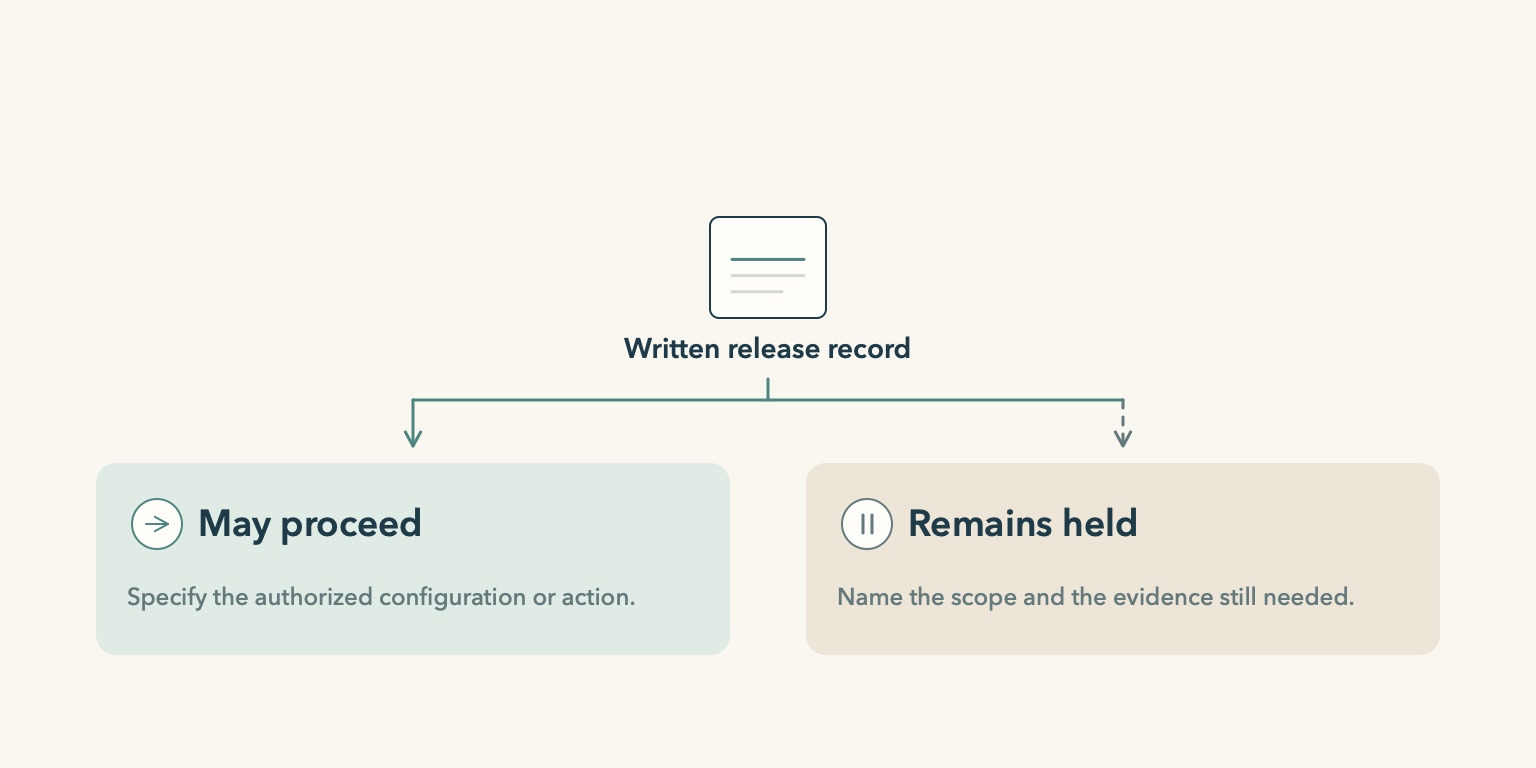
Record what can proceed and what is still held
Before moving, compare the proposed release to the FAI evidence, the run records, and the disposition list. Use the pilot first-pass and final yield review to spot recovery the final numbers hide, and compare the proposed release with our wearable mass-production readiness checks. Our guide to quality-control evidence beyond a passed sample explains how the remaining records support the release. If an item blocks the requested scope, identify the missing evidence and the condition for returning to the decision. If the evidence and written confirmation support proceeding, preserve the approved scope with the documents the next team will use. Release should be visible in a record that production and quality can act on without interpreting a meeting summary.
A practical release note names the action: for example, proceed with the specified production configuration, or hold the affected scope pending verification of an updated condition. It should point to the approved requirements and the specific status of each release-relevant open item. When a later change affects the accepted configuration, keep the original record intact and review the impact against the baseline used before volume production. That way, authorization stays tied to the evidence actually reviewed.
Frequently asked questions
What does PVT sign-off mean?
It is the recorded decision on whether a defined build can proceed after production validation, based on the applicable test and inspection results, open-item dispositions, and project authorization with written customer confirmation.
Is a set of golden samples enough to release a production run?
No. The set of golden samples made with production tooling, components, and assembly processes provides the first-article comparison against the customer-approved requirements. Release also depends on the applicable run records, documented dispositions for unresolved findings, and authorization under the project’s agreed arrangement, with written customer confirmation.
Who signs off a PVT release at NexPCB?
Sign-off follows the authority designated for the project and is supported by the customer’s written confirmation of the configuration, scope, and any conditions. The designated approver depends on the project.
Bring the release packet and the unresolved items
If your build results are in but release is still undecided, start at Accelerate Now. Bring the approved requirements, first-article and build records, and the list of findings that still need a decision. We can discuss which evidence and written confirmation are needed for the action you want to take.